
Dog fence wireless portable setups solve one very specific problem: you want your dog to stay “in bounds” somewhere that isn’t your permanent yard, without hauling posts, digging trenches, or trusting a flimsy tie-out.
If you’ve ever tried to relax at a campsite, a rental cabin, or a friend’s backyard while your dog scans for squirrels, you already know the tension. A portable wireless system can be a solid middle ground between “total freedom” and “on-leash all day,” but only if it matches your dog and the terrain.
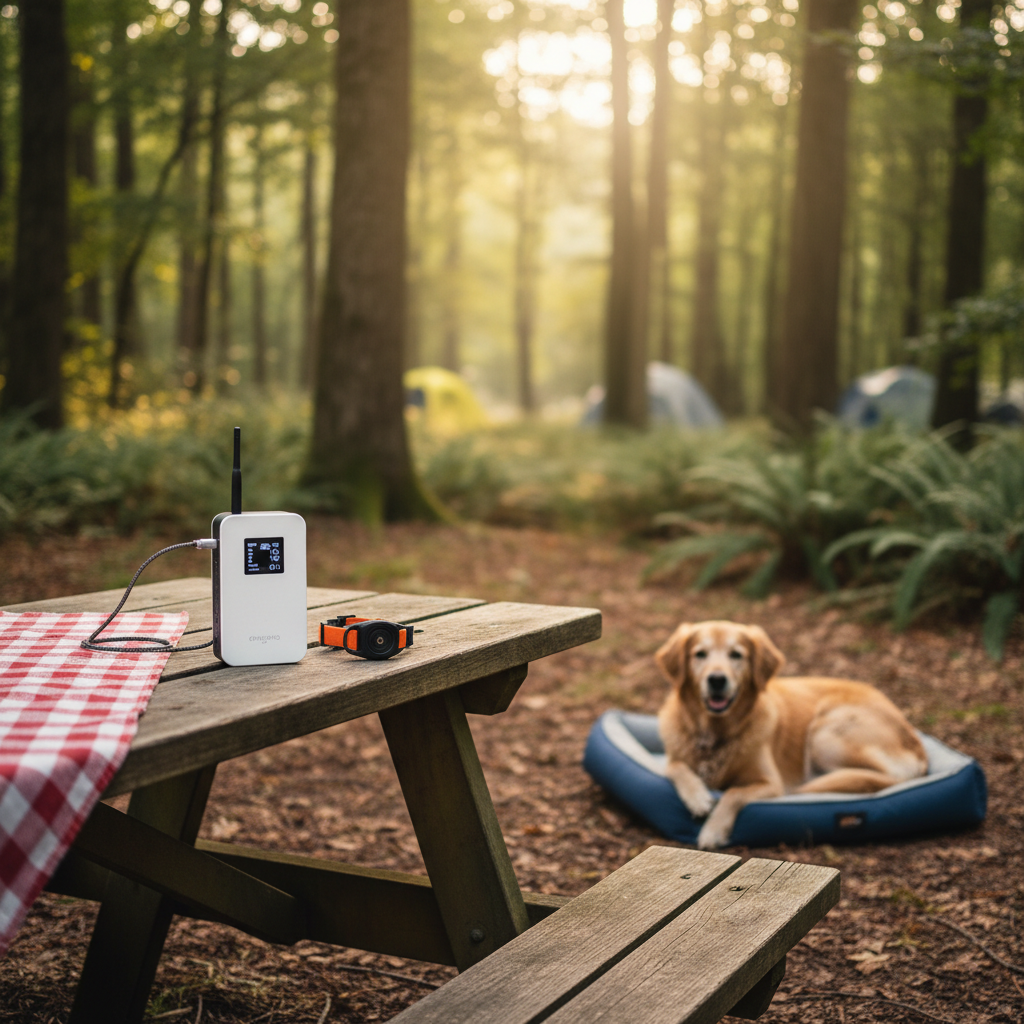
This guide breaks down what “portable wireless” really means, where these fences work well, where they tend to struggle, and how to set one up so it’s clear, fair, and as safe as possible for your dog.
What a portable wireless dog fence actually does (and what it doesn’t)
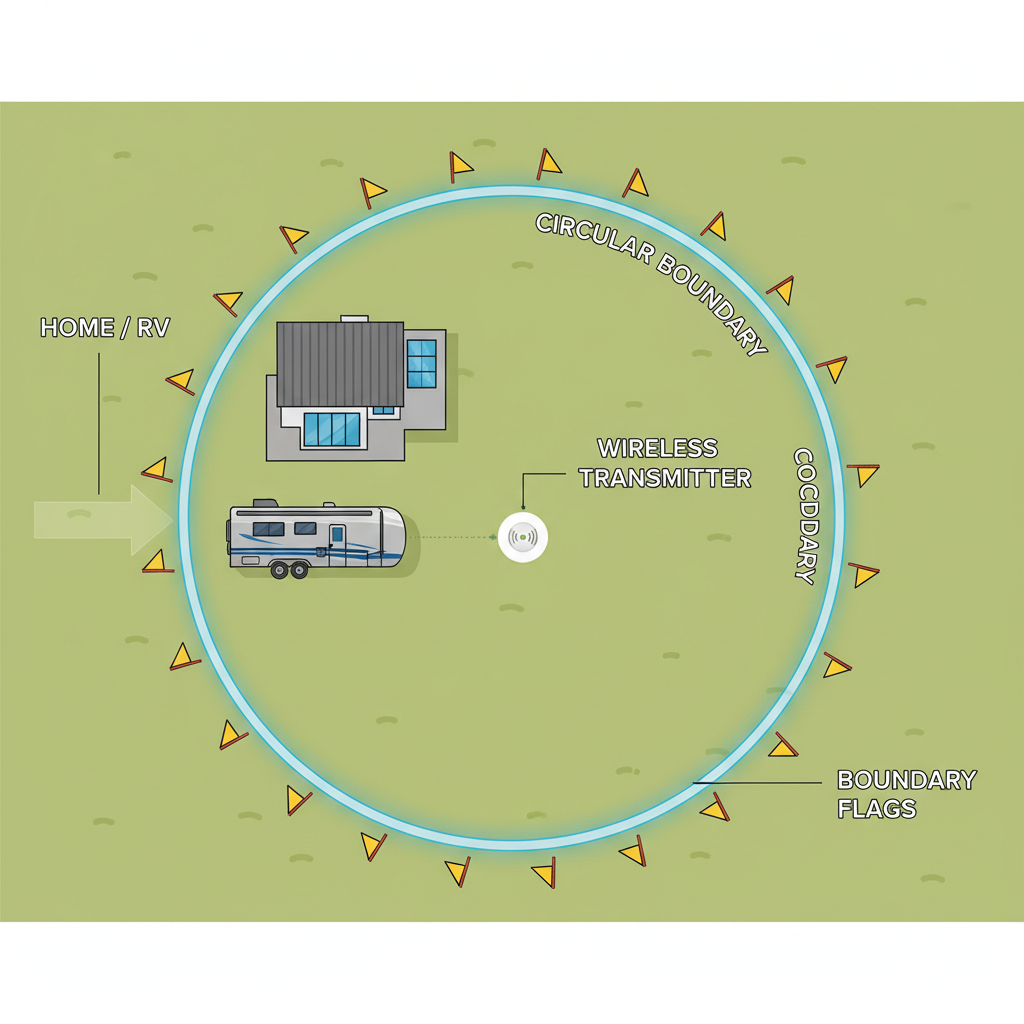
Most portable wireless systems create a circular boundary around a transmitter you plug in. Your dog wears a receiver collar, and when they approach the edge, the collar typically delivers a warning beep/vibration and may deliver a static correction if they keep going.
Two important realities often get missed:
- It’s not a physical barrier. A motivated dog can run through it, especially during the learning phase or when prey drive spikes.
- “Wireless” usually means radio-based circle. It’s not GPS in many products, so you can’t “draw” a custom shape around a pool, driveway, or neighbor’s patio.
According to the American Veterinary Society of Animal Behavior (AVSAB), aversive tools can create unintended side effects (fear, anxiety, aggression) in some dogs, which is why training approach and temperament matter as much as the device.
Why people choose dog fence wireless portable options
In real life, this category wins because it removes friction. You can bring it to a new location, set a boundary quickly, and give your dog a predictable “home base.” It’s also attractive when your HOA, landlord, or travel plans make permanent fencing unrealistic.
Common situations where it tends to help:
- RV trips and camping, where you want hands-free downtime near your site
- Short-term rentals, visiting family, lake houses
- Backyards without fences, but with enough open space for a circle
- Dogs that already understand boundary pressure from prior training
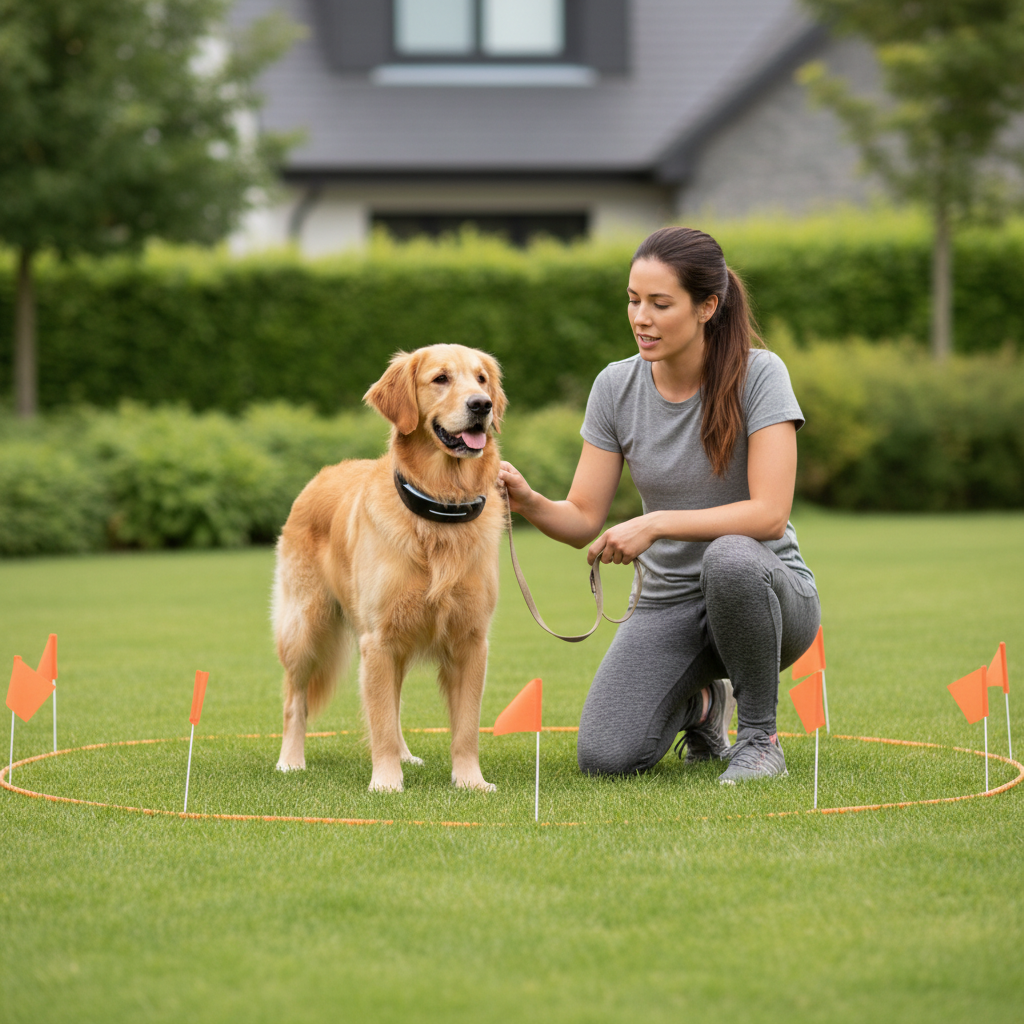
But if your main issue is “my dog bolts” or “my dog will ignore anything to chase,” the more honest answer is that portable wireless containment may be a training tool, not a guarantee.
Quick self-check: are you a good candidate?
Before you buy (or before you blame the product), run through this fast checklist. If you answer “no” to several, you may want a different setup.
- My dog is generally responsive to recall (even if imperfect)
- I can supervise during early use and high-distraction moments
- The area is fairly open (not packed with metal RVs, sheds, dense trees, or steep slopes)
- My dog is comfortable wearing a collar receiver and doesn’t panic at novel sensations
- I’m willing to train with flags and repetition for several short sessions
If you’re unsure about your dog’s fearfulness, reactivity, or sensitivity, it’s reasonable to ask your veterinarian or a qualified trainer for guidance. That’s not overkill, it’s how you avoid making the yard feel scary.
Wireless vs GPS vs in-ground: a practical comparison
People lump these together, but they behave differently in the field. Here’s a quick, decision-friendly view.
| Type | Best for | Typical strengths | Common pain points |
|---|---|---|---|
| Portable wireless (radio circle) | Travel, temporary setups, open yards | Fast setup, no digging, easy to move | Circle-only boundary, interference/terrain issues |
| GPS containment | Large properties, flexible shapes | Custom boundaries, big coverage area | Needs clear sky, battery management, GPS drift |
| In-ground wire | Permanent homes with predictable layout | Stable boundary, customizable shape | Installation work, wire breaks, not portable |
If your use case is “weekend cabin plus a few camping trips,” a dog fence wireless portable unit is usually the simplest path. If your use case is “100 acres with tree cover and no power,” you may end up happier with GPS or a different management plan.
How to set up and train without creating confusion
The device is the easy part. The hard part is teaching a rule that makes sense to your dog: “This invisible line matters.” Most failures come from rushing training or skipping the boundary markers.
Step-by-step setup (field-friendly)
- Pick the transmitter location where it’s dry, stable, and as central as possible to your desired circle.
- Start with a smaller radius than you think you need, then expand after your dog understands the concept.
- Use visual markers (training flags) all the way around, at least for the first few days. Invisible rules teach poorly.
- Test the boundary yourself with the collar in your hand before putting it on your dog, so you know where the warning zone begins.
Training approach that tends to work better
- Leash on, calm reps: walk toward flags, pause at the warning cue, then turn back and reward.
- Short sessions: 5–10 minutes, a few times a day, beats one long frustrating session.
- Don’t “trap test”: avoid tempting your dog to fail just to see if the correction works.
- Add distractions slowly: toys, kids running, other dogs nearby come later.
According to the American Kennel Club (AKC), consistent training and supervision are key to reliable off-leash behavior. In practice, portable containment works best when you treat it as part training tool, part management tool.
One more thing: early on, supervision matters more than settings. If your dog is pacing, stress panting, freezing, or refusing to move, stop and reassess. That’s usually your dog telling you the training plan needs to slow down.
Common problems outdoors (and what to do instead of guessing)
Portable wireless fences can act “weird” outside for reasons that aren’t obvious in product listings. Here are the issues that show up most often.
- Boundary feels inconsistent: move the transmitter away from large metal objects, power sources, or dense structures, then re-test the radius.
- Dog runs through anyway: reduce distractions, go back to leash training, consider a long line for a transition period.
- Dog won’t go into part of the circle: the warning zone may be too wide or too “hot,” lower intensity and rebuild confidence with rewards.
- Battery dies mid-day: build a habit around charging/spares; for long outings, plan a backup containment method.
Key point: if you’re using a dog fence wireless portable system at a campsite, you still need a Plan B for quiet hours, busy check-in times, and wildlife-heavy evenings. A leash, long line, or secure crate often ends up being the “peace of mind” layer.
Safety notes and common misconceptions
Some owners assume “lower correction” automatically means “safe,” but the bigger risk is usually confusion or fear. Keep the experience predictable and fair.
- Fit matters: a collar that’s too loose causes inconsistent contact, too tight can irritate skin. Check often, especially on fluffy coats.
- Limit wear time: many manufacturers recommend not leaving training collars on all day; follow your product guidance and watch for rubbing.
- Not for every temperament: anxious, reactive, or noise-sensitive dogs may do better with physical barriers or leashed management.
- Not a substitute for recall: if your dog can’t disengage from a trigger, containment alone may not hold.
If you see skin irritation, behavior changes, or signs of distress, it’s wise to pause use and consult your veterinarian or a credentialed trainer. Health and behavior are tied together more than people expect.
Practical buying tips (what to look for on the spec sheet)
Specs won’t tell you everything, but they can prevent obvious mismatches.
- Adjustable range: more steps gives you more tuning for small yards vs open fields.
- Vibration-only option: helpful for sensitive dogs, training phases, or owners who prefer a non-stim warning.
- Water resistance: outdoor use usually means wet grass, sprinklers, unexpected rain.
- Clear battery plan: rechargeable is convenient, replaceable can be easier on long trips, pick what matches your routine.
- Return policy: terrain and dog behavior are variable, having an exit matters.
Key takeaways: pick the right type of fence for your layout, train slower than you think you need, and treat portability as convenience, not as a promise of perfect containment.
Conclusion: a realistic way to use portable wireless containment
A dog fence wireless portable system can be a genuinely useful tool for travel and temporary outdoor setups, especially for dogs that learn patterns quickly and owners who are willing to train with intention.
If you want one action step today, do this: measure the space you actually have, then decide whether a circular boundary fits your reality. If it does, plan three short training sessions before you rely on it for a full afternoon.
FAQ
Is a portable wireless dog fence safe for all dogs?
Not always. Many dogs do fine with careful training, but anxious or reactive dogs may struggle. If you’re unsure, a veterinarian or qualified trainer can help you judge fit and risk.
Will a wireless fence work in a wooded campsite?
It can, but results vary. Dense trees, hills, and nearby metal objects sometimes affect boundary consistency, so testing the perimeter and keeping expectations realistic matters.
How long does training usually take before I can trust it?
Many dogs need multiple short sessions over several days. Some need longer, especially if distractions are intense or the dog has a history of ignoring boundaries.
Can my dog run through a wireless boundary?
Yes. Because there’s no physical barrier, high motivation can override the deterrent. That’s why supervision and recall training still matter.
What’s better for travel: wireless circle systems or GPS fences?
For quick weekend setups with power available, circle-based systems are often simpler. GPS can be more flexible for large areas, but battery and GPS drift can be tradeoffs.
Should I start with static correction or vibration/beep?
Many owners start with the least aversive setting that gets attention, then adjust only if needed. The goal is clarity, not intensity.
Can I use a portable wireless fence instead of a leash in public areas?
Usually no. Public rules and safety expectations often require a leash, and portable containment isn’t a guarantee. Treat it as private-property management unless local regulations say otherwise.
If you’re trying to choose between a dog fence wireless portable unit, a GPS boundary, or a simple long-line setup for trips, it can help to map your typical locations and your dog’s biggest distraction triggers first, then pick the tool that reduces stress for both of you rather than adding another thing to troubleshoot.