
How to stop cat from hiding often starts with one blunt truth, your cat is hiding because something feels off, not because they are being stubborn. The fix is rarely “pull them out” or “force bonding,” it is usually about making the environment predictable, lowering pressure, and checking for pain or stress signals that are easy to miss.
If your cat has always been shy, some hiding is normal. But hiding all day, especially if it is new, can mean fear, discomfort, illness, or a big change in the home. Many people focus on getting the cat to come out, when the real goal is getting the cat to feel safe enough to choose coming out.
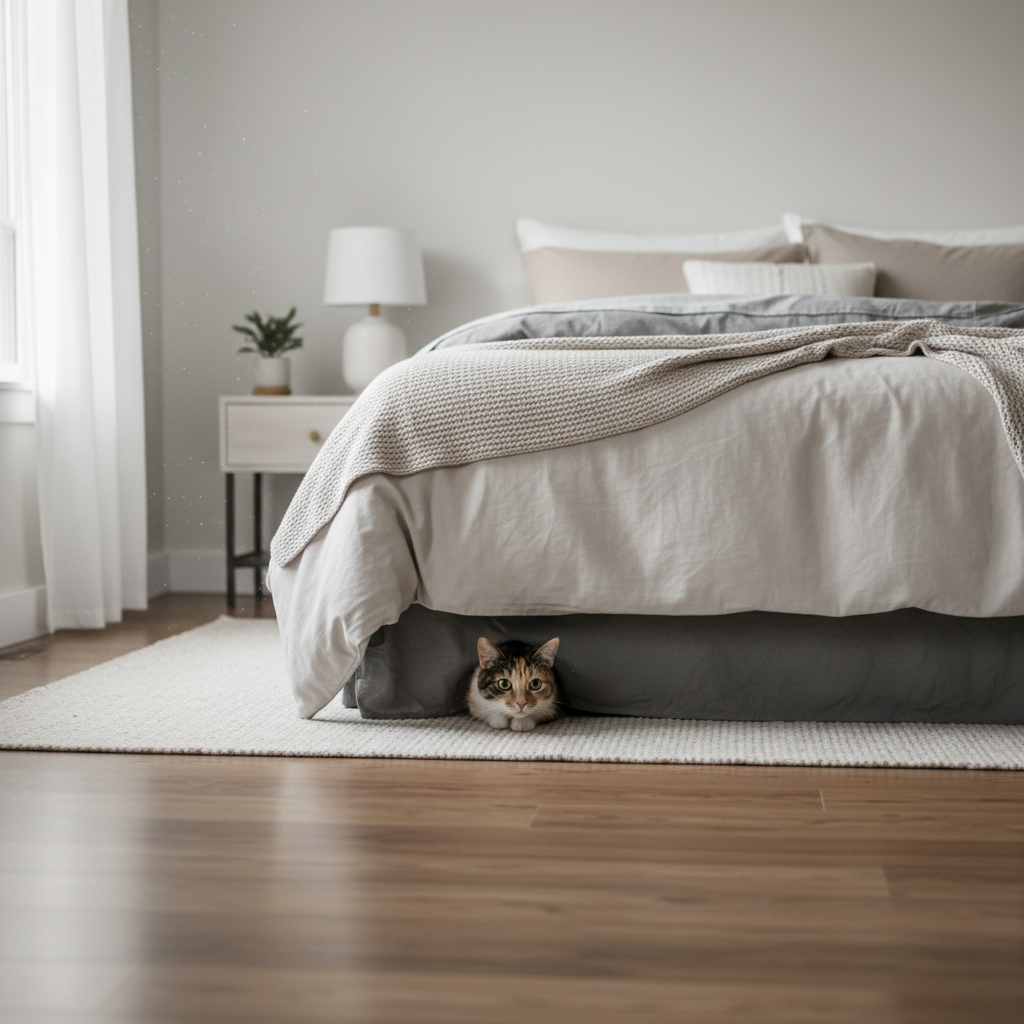
This guide breaks down the most common reasons cats hide, a quick self-check so you can sort “normal shy” from “needs attention,” and practical steps that work in real homes. You will also see when it is smarter to call your vet or a behavior professional instead of trying more tricks.
Why a cat hides all day (what is usually behind it)
When someone searches how to stop cat from hiding, they are usually dealing with a pattern that feels stuck. In many households, the cause falls into a few buckets, some behavioral, some medical, often both.
- Stress from change: moving, remodeling, new roommates, travel, schedule shifts, even a different brand of litter can matter to some cats.
- Noise and unpredictability: loud kids, guests, dogs, construction, parties, or a neighbor’s constant barking.
- Conflict with another pet: not always obvious chasing, sometimes it is silent blocking, staring, or “resource guarding” around food and litter.
- Pain or illness: dental pain, arthritis, urinary discomfort, GI issues, and hyperthyroidism can all reduce confidence and increase hiding.
- Negative experiences: being grabbed, forced out, punished, or medicated in the hiding spot can teach “hiding keeps me safe.”
- Personality and early socialization: some cats are simply cautious, especially if they were under-socialized as kittens.
According to the American Veterinary Medical Association (AVMA), behavioral changes can be a sign of underlying medical problems, so a sudden shift toward hiding deserves attention rather than guesswork.
Quick self-check: is this normal shy behavior or a red flag?
Before you focus on how to stop cat from hiding, it helps to classify what you are seeing. “New behavior” and “paired with other symptoms” are the two biggest clues that it is more than shyness.
Red flags that justify a vet call soon
- Hiding started suddenly and persists more than 24–48 hours
- Not eating, eating much less, or drinking much less
- Vomiting, diarrhea, coughing, sneezing, or labored breathing
- Litter box changes, straining, crying, blood, urinating outside the box
- Limping, stiffness, reluctance to jump, sensitivity to touch
- Weight change, dull coat, unusual vocalizing, aggression that feels out of character
Signs it may be stress or environment, not an emergency
- Cat still eats and uses the litter box normally (even if timing shifts)
- Comes out at night to explore, play, or snack
- Hides mainly during noisy hours, guests, or around another pet
- Accepts treats or play when you sit quietly nearby
If you are unsure, err on the safe side. A quick check-in with a veterinarian is often faster than weeks of “training” that never works because the cat hurts.
Fix the setup first: create a “safe base” your cat can trust
A lot of advice on how to stop cat from hiding skips the boring part, the home setup. But this is where most progress actually comes from, because cats come out when they feel they can control distance and escape routes.
Start with one calm room as a base camp, especially for a new cat or a cat overwhelmed by the household.
- Covered hide + open perch: a carrier with the door off, a covered bed, plus a cat tree or shelf so they can observe without being cornered.
- Food, water, litter separated: avoid putting litter right next to food, many cats dislike that.
- Comfort cues: familiar blanket, a worn T-shirt with your scent, steady white noise if the home is loud.
- Traffic control: block off under-the-bed access if it becomes a “never come out” bunker, but only after you provide a better hiding option that feels safer.
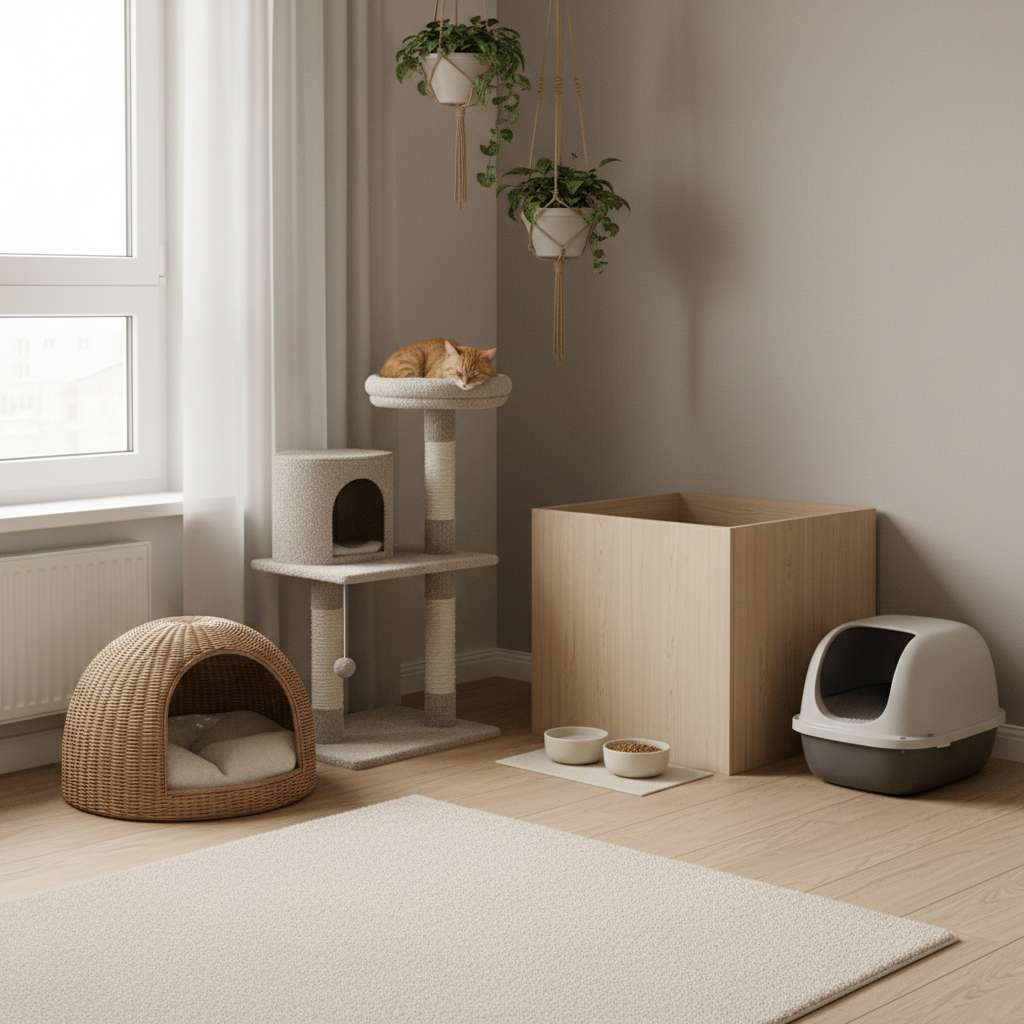
One more detail people underestimate, your cat needs to be able to move without being ambushed. If another pet “camps” near the doorway, food, or litter, the cat that hides will keep hiding because they are making a rational choice.
Use a low-pressure routine that teaches “coming out works”
If you want results, make your cat feel like they initiated the interaction. That is the opposite of hovering, calling their name repeatedly, or dragging them out for cuddles. It also means you may need to slow down before you speed up.
A simple daily plan that fits most homes
- Same meal times: predictability reduces anxiety, especially for timid cats.
- Treat trail: place a few high-value treats from the hiding spot toward a “social zone,” then stop, let them choose.
- Short play windows: wand toy play from a distance, 5–10 minutes, end before they bolt.
- Calm presence: sit on the floor, sideways to the cat, quiet voice, slow blinks, let them approach.
According to the American Association of Feline Practitioners (AAFP), providing an environment that supports natural feline behaviors, like climbing, hiding, and predictable access to resources, can reduce stress and related behavior issues.
Many cats improve fastest when you reward tiny steps, one paw out, then two, then a brief sniff. The temptation is to “celebrate” with a big reach, but that often resets trust.
Scenario playbook: what to do in the most common hiding situations
How to stop cat from hiding depends heavily on what changed. Here are the patterns that show up most, with steps that tend to work without making the cat feel trapped.
New cat hiding after adoption
- Limit space for the first 3–7 days to one safe room, then expand gradually.
- Use meals and play to build a predictable rhythm.
- Handle less than you think you should, especially in week one.
Cat hides when guests come over
- Set up a guest-proof safe room with food, water, and litter before guests arrive.
- Ask guests to ignore the cat, no eye contact, no reaching, no chasing.
- Offer a high-value lickable treat after the house settles, not during peak noise.
Cat started hiding after a move or renovation
- Recreate familiarity, same litter, same bowls, same routines, familiar bedding.
- Start with one “finished” quiet room, then add rooms slowly.
- Consider pheromone support if your vet agrees it fits your cat.
One cat hides because of another cat
- Add resources: more litter boxes, more feeding stations, more vertical space.
- Watch for silent bullying: blocking hallways, staring, swatting near litter.
- If tension is high, separate and reintroduce gradually, a feline behavior pro can speed this up.
What to try (and what to avoid): a practical checklist
This is the part most people want, the “do this today” list. Use it like a menu, pick a few changes, then keep them steady for at least a week so your cat can learn the new pattern.
Do try
- Make hiding spots intentional: covered bed, carrier cave, cat condo, not the deepest corner under furniture.
- Turn the carrier into furniture: door off, blanket inside, treats placed near it daily.
- Increase vertical territory: cat tree near a window, shelves, or even cleared top of a sturdy dresser.
- Use “quiet rewards”: toss treats, slow blink, gentle praise, avoid sudden touching.
- Track behavior: note eating, litter box use, play, and hiding duration.
Avoid (even if it feels logical)
- Pulling your cat out: it can turn hiding into a habit reinforced by fear.
- Blocking every hiding spot at once: cats need somewhere to retreat, remove one spot only after a better option exists.
- Punishing “skittish” behavior: it usually increases anxiety and distance.
- Overexposure: forcing the cat to “get used to it” often backfires.
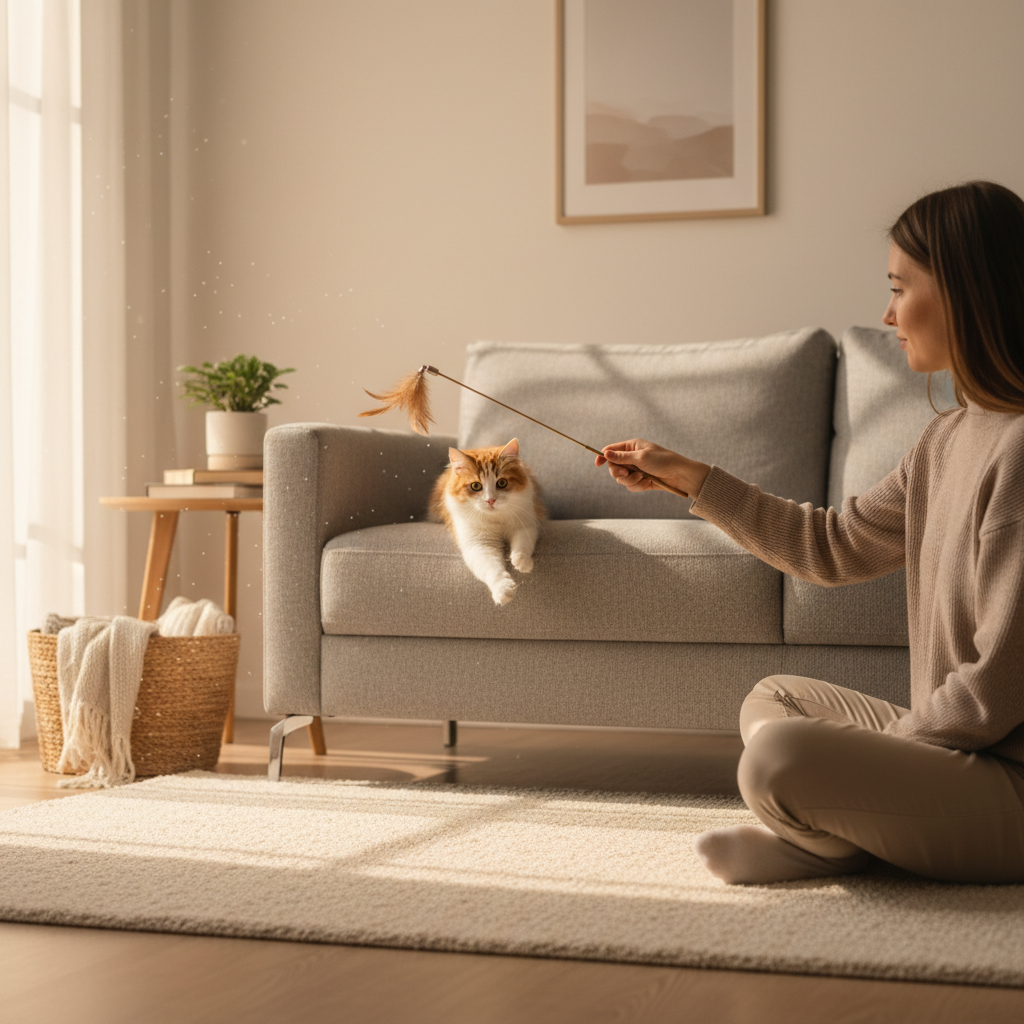
Key point: if your cat only comes out at night, do not “trap” them then. Use nighttime as your training window, quiet play, quiet treats, then let them retreat. Confidence builds faster when retreat stays available.
A quick troubleshooting table (symptom → likely cause → next step)
Use this table to decide what to tackle first. It is not a diagnosis, just a way to stop spinning your wheels.
| What you see | Often associated with | What to do next |
|---|---|---|
| Sudden hiding + not eating | Pain, illness, severe stress | Call your veterinarian, monitor hydration and litter box |
| Hides mainly when guests or kids are active | Noise sensitivity, overstimulation | Safe room, predictable routine, guests ignore cat |
| Cat hides near litter/food areas | Resource conflict with another pet | Add stations, separate access routes, consider reintroduction plan |
| Comes out to eat at night only | Low confidence, daytime stress | Reward small daytime exploration, reduce pressure, add vertical perches |
| Hiding plus growling when touched | Pain or fear response | Avoid handling, schedule a vet exam, use distance-based rewards |
When to get professional help (and who to ask)
If you have tried environmental changes and a calmer routine for a couple of weeks and the hiding pattern stays the same, it is reasonable to bring in expert eyes. Also, if your cat shows red flags like appetite loss, litter box pain, or breathing changes, do not wait on behavior fixes.
- Veterinarian: rule out medical causes, discuss pain control, anxiety support, or referrals.
- Board-certified veterinary behaviorist: best fit for complex fear, aggression, multi-cat conflict, or trauma history.
- Qualified cat behavior consultant: can help you set up resources, routines, and reintroductions, especially for multi-pet homes.
Medication is not always needed, but in some cases it can lower anxiety enough that training and home changes actually work. That decision belongs with your veterinarian, based on your cat’s health profile.
Conclusion: make “out in the open” feel safe, not mandatory
How to stop cat from hiding is less about bravery and more about trust, comfort, and control. Your best leverage points are predictable routines, a safe base with good hiding and perching options, and rewards that do not come with pressure.
If you do only two things this week, keep a simple behavior log and rebuild the environment so your cat can move without feeling trapped. If anything looks medical, or the change came out of nowhere, schedule a vet visit and take the guessing out of it.