
puppy training basics come down to one thing: make the right behavior easy to repeat, and the wrong behavior hard to practice, without turning your home into a stressful boot camp.
If you feel like you’re correcting your puppy all day, you’re not failing, you’re just missing a system. Most “bad” puppy behavior is normal puppy behavior happening at the wrong time, in the wrong place, with unclear rules.
This guide lays out a practical, beginner-friendly plan you can run at home: a potty schedule you can follow, crate training without drama, simple obedience cues, leash walking foundations, and realistic ways of stopping puppy biting and nipping. No magic tricks, just repeatable steps.
What usually goes wrong (and why it feels personal)
Most new puppy training tips sound simple until you try them during real life, right when the puppy is tired, the kids are loud, or you’re late for work. A few patterns show up again and again.
- Inconsistent rules: “No biting” is enforced sometimes, ignored other times, and your puppy learns to keep testing.
- Too much freedom too soon: roaming the house increases accidents, chewing, and stealing items, which then becomes a habit.
- Training when the puppy is over threshold: if your puppy is frantic, hungry, or overstimulated, learning drops fast.
- Accidentally rewarding the wrong thing: attention, chasing, and talking can reward jumping, nipping, and barking.
According to the American Veterinary Society of Animal Behavior (AVSAB)... positive reinforcement and early, safe socialization tend to be associated with better behavior outcomes than punishment-based approaches. In plain English, your timing and rewards matter more than “being strict.”
A quick self-check: what kind of puppy training plan do you need?
Before you overhaul everything, figure out what’s actually happening. Use this quick checklist to sort your situation.
If potty training feels impossible
- Accidents happen within 10–20 minutes after meals or play
- You’re not sure how often your puppy needs to go out
- Your puppy sneaks off to potty in hidden corners
If obedience cues aren’t sticking
- Your puppy listens only when treats are visible
- They do “sit” in the kitchen, but not outside
- They get distracted the second you move
If biting and nipping is the daily headline
- Nipping escalates during evening “zoomies”
- Hands, sleeves, and ankles are the favorite targets
- Yelping makes it worse, not better
This matters because the fix depends on the category. Potty issues need management and timing, obedience needs repetition plus better reward placement, and nipping often needs sleep and bite-inhibition practice.
Puppy potty training schedule you can actually follow
A workable puppy potty training schedule is less about perfect timing and more about removing “surprise opportunities.” Until your puppy earns freedom, you’re either supervising, crating, or using a puppy-safe pen.
Rule of thumb (use it loosely)
- Take your puppy out after waking, eating, drinking a lot, vigorous play, and training sessions.
- Also take them out every 1–2 hours when they’re young, then gradually stretch the interval if accidents stay low.
Sample daily schedule (adjust to your household)
| Time | What to do | Why it helps |
|---|---|---|
| Morning wake-up | Potty trip immediately | Prevents the first indoor accident |
| Breakfast | Eat, then potty within 10–20 min | Meals often trigger elimination |
| Mid-morning | Play/training, then potty | Activity increases urgency |
| Afternoon | Potty every 1–2 hours (young pups) | Keeps practice reps outdoors |
| Evening | Potty after dinner, after play, before settling | Reduces zoomie-time accidents |
| Before bed | Last potty trip, then crate/pen | Supports overnight routine |
The “boring potty trip” method
- Go to the same spot on leash.
- Say a simple cue once, like “go potty.”
- Wait quietly 3–5 minutes, then either reward and go in, or go in and try again soon.
Key point: reward outside success within 1–2 seconds with a treat and calm praise. If you wait until you’re back inside, your puppy won’t connect the dots.
Crate training a puppy step by step (without creating fear)
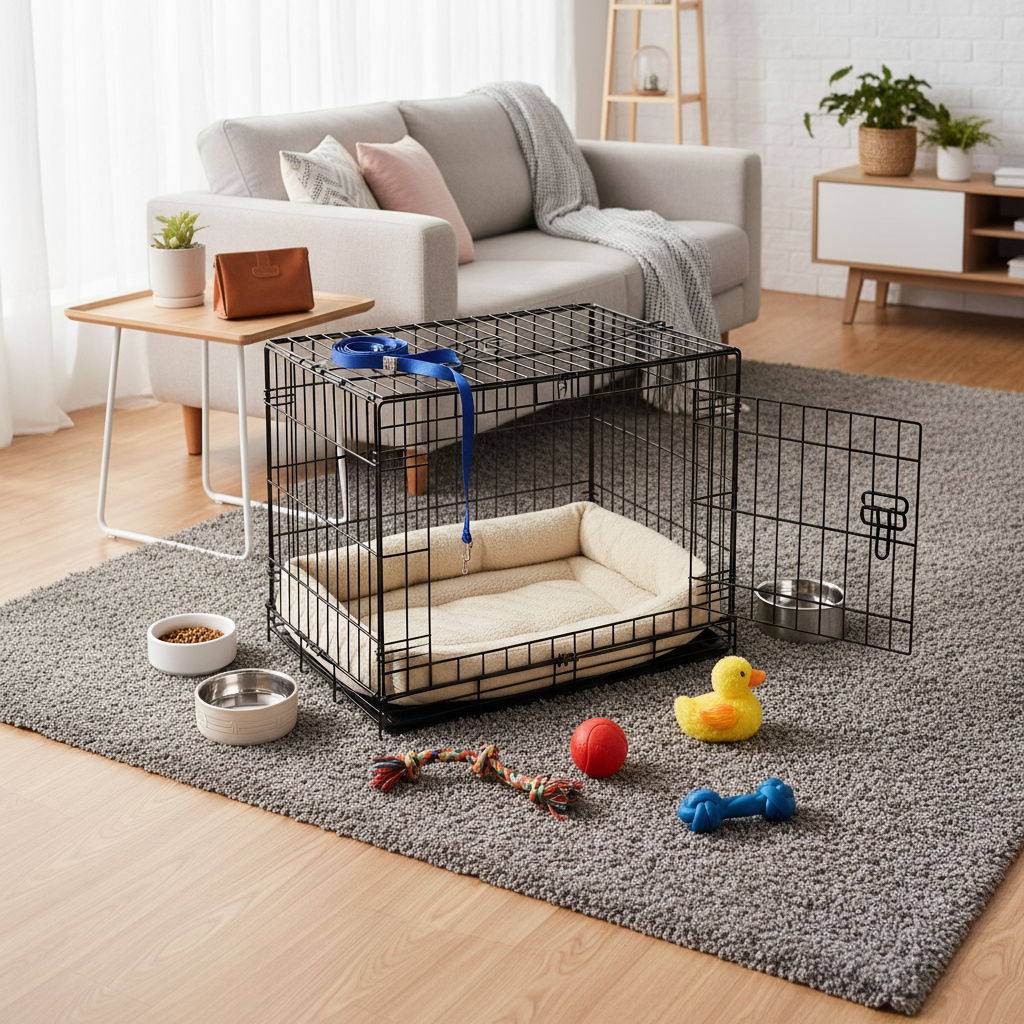
Crate training a puppy step by step works best when the crate predicts good stuff and rest, not isolation. If your puppy screams for a long time, slow down; forcing it tends to backfire.
Step-by-step plan
- Step 1: Make the crate a snack bar by feeding meals near the crate, then just inside it.
- Step 2: Short door closes for 5–15 seconds while they chew a high-value treat, then open before panic.
- Step 3: Build duration in small jumps, mixing easy reps with slightly harder ones.
- Step 4: Add distance by taking one step away, returning, and rewarding calm.
- Step 5: Add real life such as showering or taking out trash, but keep it short at first.
Crate rules that save you headaches
- Potty before crating, especially after play.
- Give a legal chew, not loose bedding if your puppy eats fabric.
- If whining is new, consider “need to potty” before assuming it’s attention seeking.
According to the American Kennel Club (AKC)... crates are commonly used as a safe management tool when introduced positively. Management is not “cheating,” it’s how you prevent unwanted habits from forming.
Puppy obedience training for beginners: sit, stay, and the habit of listening
puppy obedience training for beginners should feel easy in the first week. If it doesn’t, the distraction level is too high or the reward isn’t worth it to your puppy.
Teaching a puppy to sit and stay (simple progression)
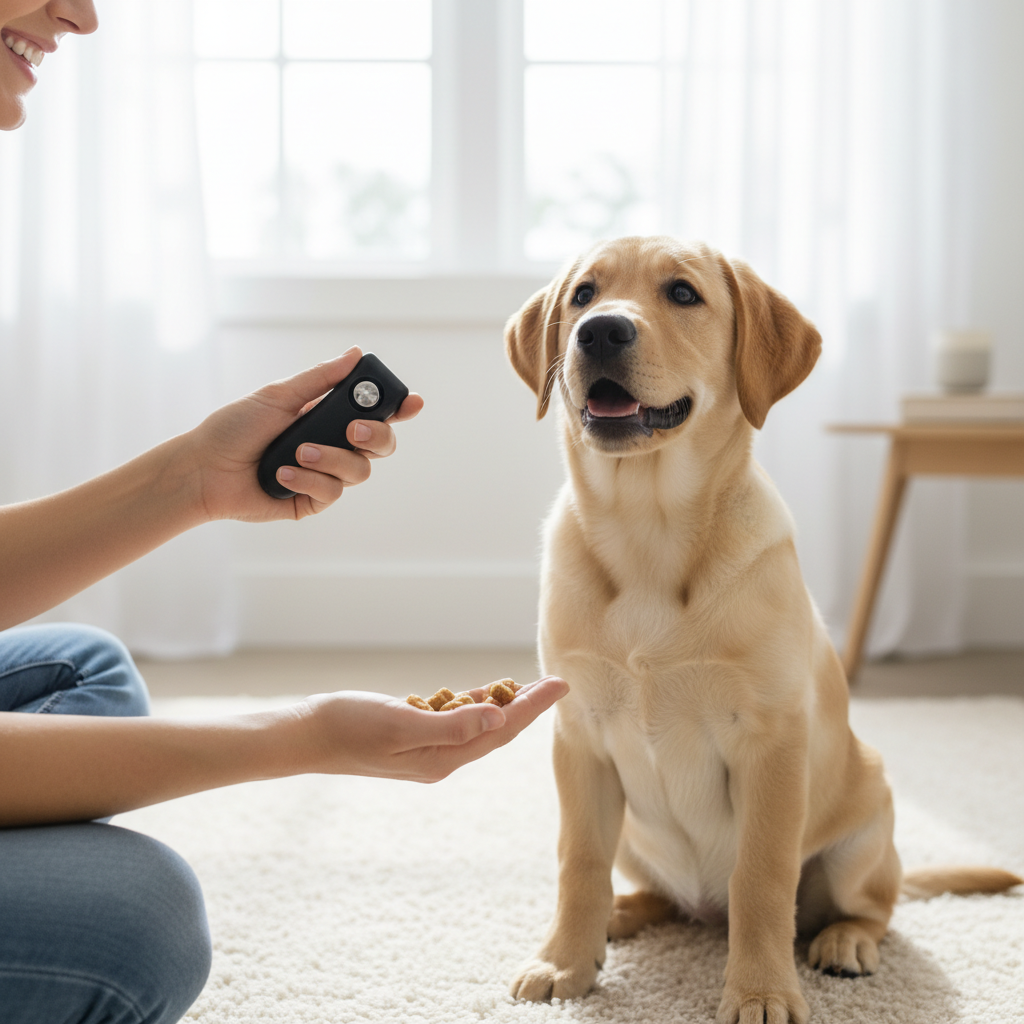
- Sit: lure with a treat from nose to forehead, mark the moment the butt hits the floor, reward.
- Stay: start with one second, reward, release. Add time before adding distance.
- Release word: use “okay” or “free” so your puppy knows when the rep ends.
Make “listening” a lifestyle
- Ask for a sit before meals, leash clipping, and going outside.
- Reward calm eye contact randomly, not only when you ask for it.
- Keep sessions short, 2–5 minutes, a few times daily.
Key point: fade treats the right way by switching from “treat every time” to “treat unpredictably,” while still praising and occasionally paying well for great effort.
Leash training a puppy for walks (before you focus on distance)
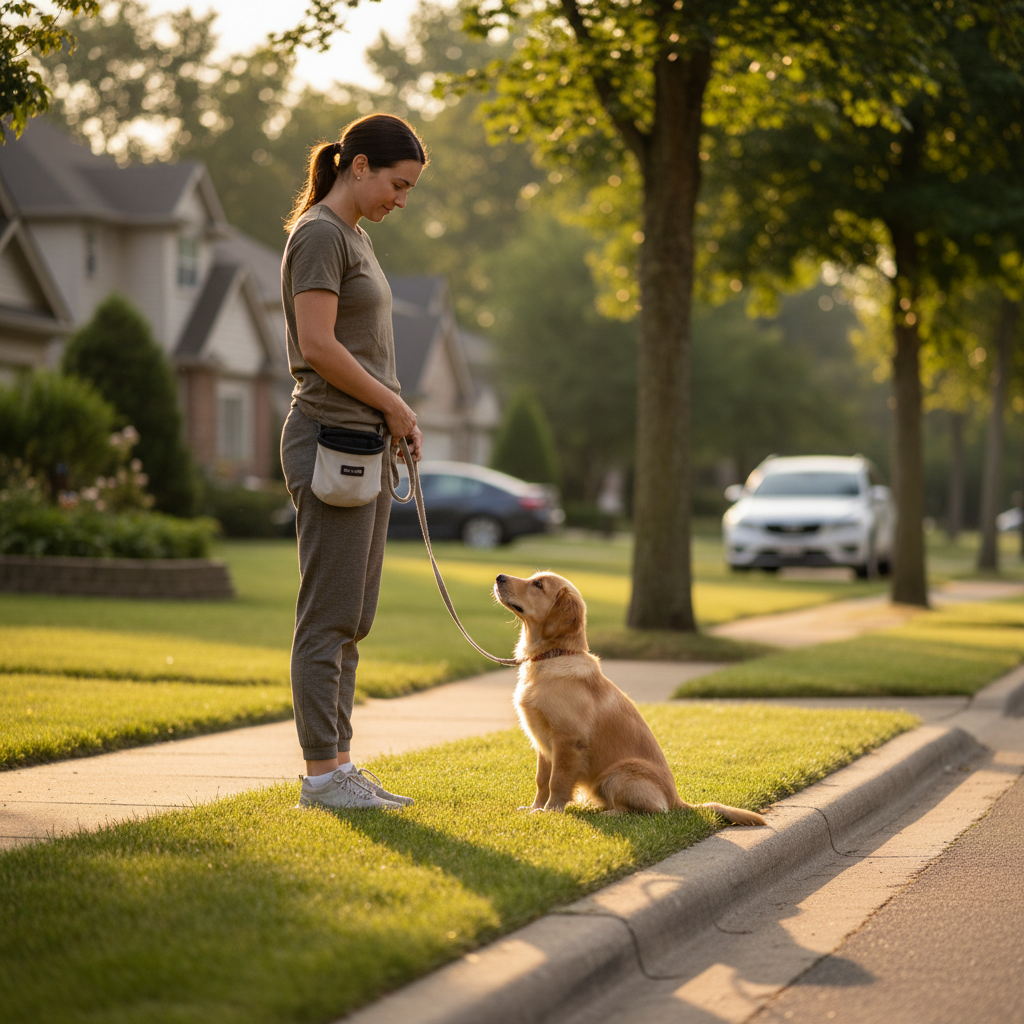
Leash training a puppy for walks often goes sideways because people try to “walk the neighborhood” before the puppy understands pressure and attention. Early on, your goal is a loose leash for 10–30 seconds at a time, not a mile.
Start in the easiest environment
- Practice indoors or in a quiet driveway first.
- Reward your puppy for being near your leg, not out in front pulling.
- If pulling happens, stop and wait for slack, then move again.
A beginner pattern that works
- Say your puppy’s name once, reward when they look at you.
- Take 3–5 steps, reward for loose leash.
- Turn around before the puppy hits the end of the leash, reward for following.
According to the Humane Society of the United States... reward-based training helps teach animals what you want them to do, which is often more effective than focusing on punishment. That principle applies to leash manners too.
Stopping puppy biting and nipping without making it a game
stopping puppy biting and nipping usually needs two fixes at once: teach your puppy what to bite instead, and reduce the situations where they lose self-control.
What to do in the moment
- Freeze your hands and body for 1–2 seconds, then redirect to a toy.
- If they re-attach, calmly end access: step behind a baby gate or use a short time-out in a safe pen for 30–60 seconds.
- Avoid wrestling with your hands, even “gently,” because many puppies treat it as play.
Prevent the evening bite-fest
- Schedule naps. Many puppies get mouthier when overtired.
- Use chew rotations: frozen rubber toys, safe chews approved by your vet.
- Do short training games before zoomies peak, then settle with a chew.
If biting seems intense, breaks skin often, or comes with stiff body language, it can be worth talking with a qualified trainer or veterinary behavior professional, since safety matters more than sticking to a DIY plan.
Puppy socialization checklist (safe, calm, and not rushed)
A puppy socialization checklist is not a “meet 100 dogs in a week” challenge. It’s controlled exposure to sights, sounds, surfaces, people, and friendly animals, paired with treats, so the world feels normal.
Checklist ideas to work through gradually
- People: hats, sunglasses, kids at a distance, people using walkers
- Sounds: doorbell, vacuum, city traffic audio played quietly
- Surfaces: grass, gravel, metal grates, slick floors
- Handling: paws touched, ears checked, brief brushing
- Places: car rides, parking lots, outside a school at pickup time
Safety notes you shouldn’t skip
- Ask your veterinarian about appropriate socialization timing for your puppy’s vaccine status and local disease risk, since that can vary by area.
- Choose “calm and curious” over “overwhelmed but surviving.” If your puppy shuts down, you moved too fast.
Key point: socialization is about emotional response. A quiet treat scatter while your puppy watches the world can be more valuable than forced greetings.
How to train a puppy at home: a 10-minute daily plan
If you’re wondering how to train a puppy at home without spending all day on it, aim for short blocks you can repeat. Consistency beats intensity.
A simple daily routine
- 2 minutes: name game and eye contact rewards
- 3 minutes: sit, down, short stay, release word
- 2 minutes: leash skills in the hallway or yard
- 3 minutes: handling practice and calm settle on a mat
Positive reinforcement puppy training methods, in plain terms
- Reward the behavior you want to see again, fast.
- Set up the environment so your puppy can succeed, like using gates and pens.
- Increase difficulty slowly: more distractions, then more distance, then more duration.
When it feels messy, return to basics: smaller steps, better rewards, and fewer chances to rehearse the unwanted behavior.
Wrap-up: the version of “progress” that actually matters
If your puppy has more good minutes today than last week, you’re on the right track. Puppy training basics are not about perfection, they’re about building habits through clear routines, smart management, and rewards that make sense to a young dog.
Pick two priorities for the next 7 days, usually a potty routine plus crate comfort, then layer in sit/stay and leash foundations once your household feels calmer. If you get stuck, a session with a certified trainer can save weeks of trial and error.