
Reptile water bowl shallow options are popular for a simple reason: they help many reptiles drink and soak safely without turning the enclosure into a soggy, dirty mess.
If you have ever watched a gecko track substrate into the water, or a snake wedge its body under the rim and flip the dish, you already know the pain. Spills can spike humidity, encourage mold, and leave your pet without clean water until you notice.
This guide breaks down what “shallow” really means for different species, what features actually reduce tipping and sloshing, and how to set up a water station that stays clean longer. No magic tricks, just practical choices that usually work in real tanks.
Why shallow bowls reduce mess (and when they don’t)
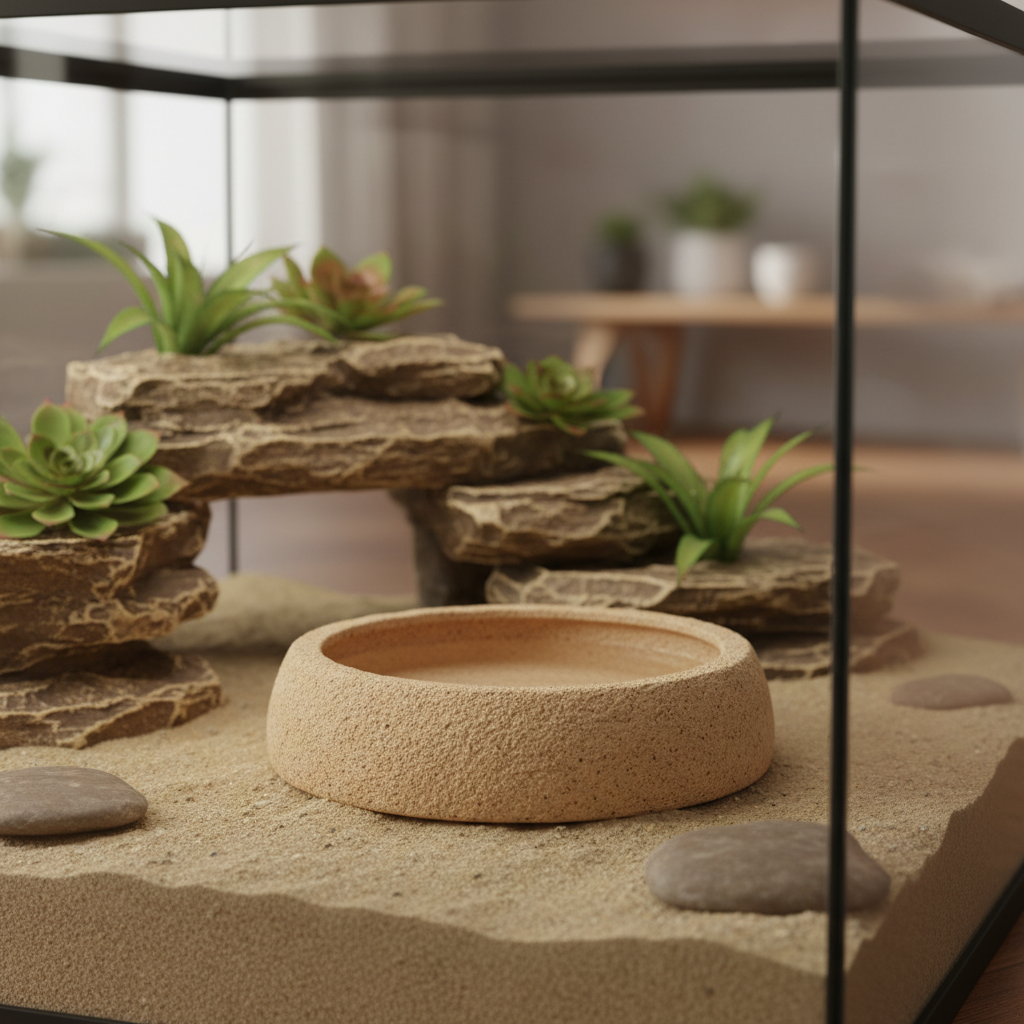
A shallow bowl spreads water across a wider surface area, which often lowers the “tipping leverage” compared with a tall, narrow dish. In plain terms, it’s harder for many reptiles to get enough lift under the rim to flip it.
It also changes the spill pattern. Instead of a big wave that dumps out, shallow designs tend to slosh less dramatically, especially if the base is wide or textured.
- Better for small lappers (geckos, anoles) that don’t need deep water to drink.
- Safer edges for smaller animals that could struggle with steep sides.
- Easier to spot contamination because debris is visible quickly.
But shallow is not automatically “anti-spill.” If the bowl is too light, placed on unstable substrate, or sized wrong for a heavy-bodied reptile, it can still slide or tip.
Quick self-check: are you dealing with tipping, splashing, or fouling?
Before buying a new dish, pinpoint the problem. The fix depends on what’s actually happening.
- Tipping: the bowl flips or ends up upside down, usually from climbing or pushing.
- Sliding: the bowl stays upright but migrates across the tank, often on loose sand or smooth glass.
- Splashing/sloshing: water ends up outside the dish after fast movement or tail-whips.
- Fouling: the bowl stays put but gets dirty fast from substrate, feeders, or waste.
If you mainly have fouling, a different placement and cleaning routine may help more than switching to a new product.
What to look for in a shallow anti-spill reptile water bowl
Marketing terms get loose here, so focus on physical features that usually matter in a terrarium.
Weight and base footprint
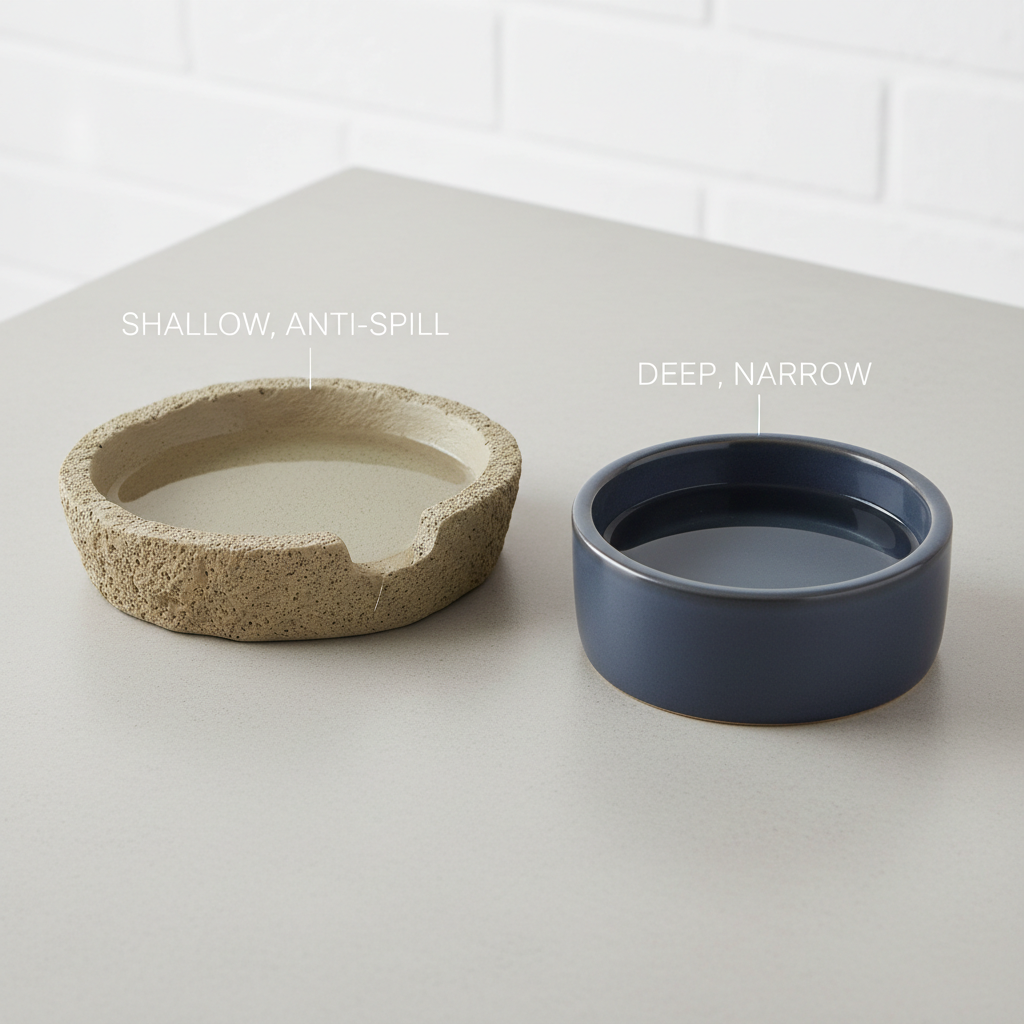
A heavier bowl with a wide base is harder to tip, even if your reptile uses it like a step stool. Resin “rock” styles often work because they’re bulky, though quality varies by brand.
Rim shape and water line
Look for a lower center of gravity and a rim that doesn’t encourage levering. A slightly inward lip can reduce slosh, while still keeping access easy.
Texture and grip
Textured bottoms resist sliding on glass and sealed PVC. Smooth bowls can skate around, especially when your pet bumps them repeatedly.
Cleanability (this one gets ignored)
Deep crevices and “rock” pores look natural, but they also hold biofilm. Choose something you can scrub quickly. According to the American Veterinary Medical Association (AVMA), pets should have access to clean water, and hygiene is a core part of basic care.
Choosing the right size: a practical guide by common reptile types
The best reptile water bowl shallow size depends more on body shape and behavior than on enclosure size alone.
| Reptile type | Typical need | Shallow bowl tip | What usually causes spills |
|---|---|---|---|
| Leopard gecko / small geckos | Drinking, occasional toe-soak | Low lip, stable base, easy to disinfect | Substrate tracked into water |
| Bearded dragon | Drinking, sometimes brief soak | Wider dish, heavier resin or ceramic | Climbing into the bowl, splashing |
| Ball python / many snakes | Drinking, soaking during shed | Consider “low but wide,” not ultra-shallow | Wedge-and-lift tipping, pushing |
| Tortoises | Drinking, safe entry/exit | Very low entry, no steep sides | Bulldozing, dragging the dish |
If your snake truly needs soaking space for shedding support, going extremely shallow may backfire because the animal tries to “make it work” and knocks it around. In that case, a low-profile, heavier basin often beats the flattest dish.
Setup steps that prevent spills (even with a decent bowl)
The bowl matters, but placement is the quiet hero. A good setup can make an average dish behave like an anti-spill model.
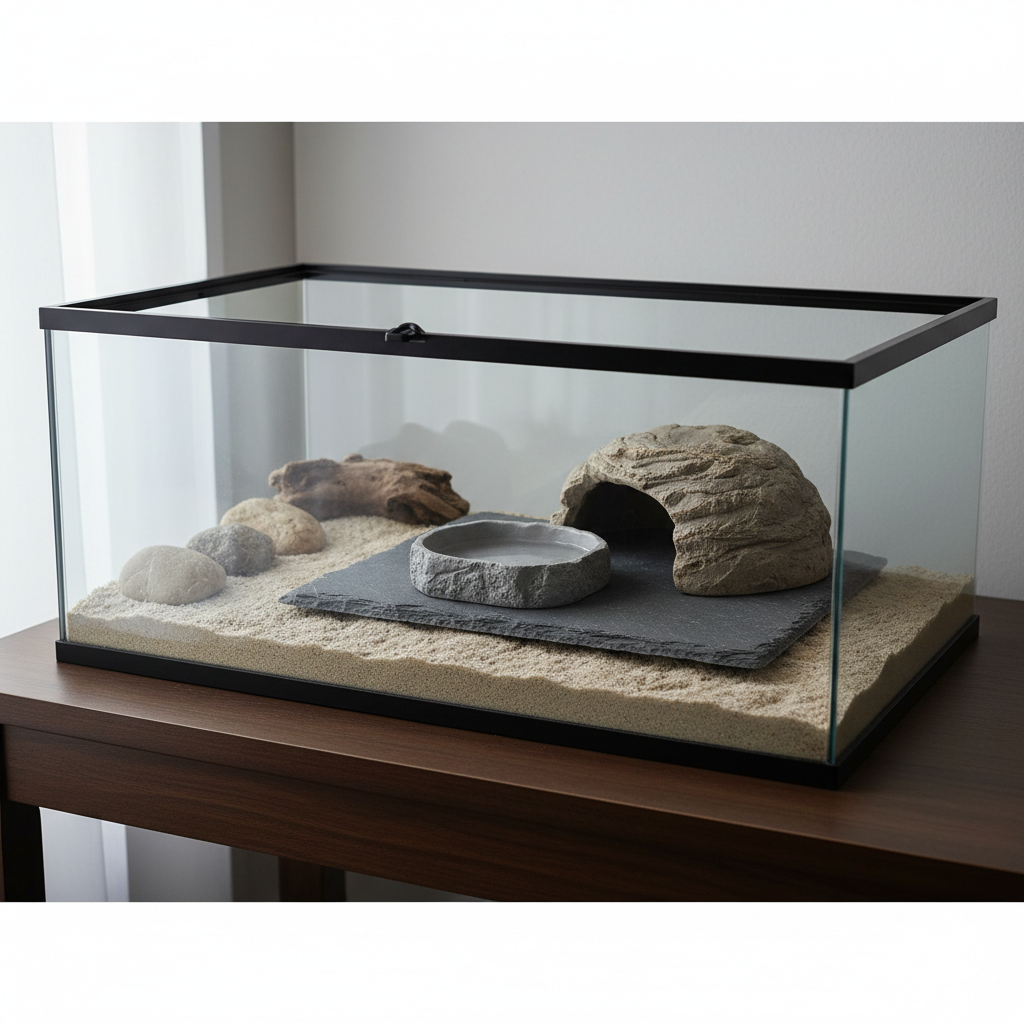
- Place on a firm, level surface: a flat slate tile or feeding platform under the bowl reduces wobble on loose substrate.
- Anchor with hardscape: snug the bowl against a wall, rock, or decor piece so it can’t be pushed from every direction.
- Keep it away from heat hot spots: less evaporation means fewer refills and less mineral ring buildup.
- Manage “traffic”: if your reptile uses the dish as a launchpad to a hide, you’ll get splashes; move it a few inches and retest.
For very active species, some keepers use a shallow dish plus a second water source like a dripper or misting routine, but humidity and respiratory risk can vary by species. If you’re unsure, it’s smart to check husbandry guidance for your specific animal.
Keeping water cleaner longer: small habits that help
A shallow bowl can get dirty faster simply because there’s more exposed surface. The trade-off is you often notice it sooner, which is a good thing.
- Rinse and refill on a schedule: many enclosures do well with daily refresh, but frequency depends on heat, species, and how messy your animal is.
- Use a dedicated scrubber: a small brush helps remove biofilm from corners and texture.
- Watch for mineral buildup: hard water leaves a ring that can trap grime; periodic soaking with reptile-safe cleaning methods helps.
- Reduce substrate kick-in: a feeding area or a small “landing zone” of smooth stones around the bowl can cut debris.
According to the ASPCA, clean, fresh water is part of basic reptile care guidance, and dirty dishes can contribute to poor enclosure hygiene. If you’re seeing recurring slimy buildup, consider adjusting cleaning frequency and checking water source and enclosure temps.
Common mistakes (these cause most “anti-spill” failures)
- Buying too light: a very shallow but featherweight dish still flips when a larger reptile steps on the rim.
- Placing it on deep, loose bedding: the bowl tilts, water line shifts, and slosh becomes a spill.
- Overfilling: shallow designs punish overfilling, even a small bump can overflow.
- Ignoring behavior: some reptiles will dig under, shove, or redecorate; you may need anchoring, not a different bowl.
- Choosing “natural texture” that can’t be cleaned well: it looks great until odor and film become a weekly fight.
Key takeaway: a stable base plus smart placement usually beats chasing the most “spill-proof” label.
When to ask a vet or experienced keeper
Water setup sounds simple, but it connects to hydration, shedding, and humidity. If your reptile refuses to drink, has repeated stuck shed, or you suspect dehydration, it’s safer to consult a qualified reptile veterinarian. According to the Association of Reptile and Amphibian Veterinarians (ARAV), reptile health concerns are best assessed by vets familiar with reptile-specific husbandry and medicine.
Also consider getting help if you’re fighting constant wet substrate or mold, because the fix may be ventilation and heating strategy, not just a bowl swap.
Conclusion: a simple plan that works in most enclosures
A reptile water bowl shallow dish can be a solid upgrade when your current setup tips, slides, or turns into a swamp, but the bowl only does part of the job. Pick a wide, heavier model you can actually clean, set it on a stable platform, and adjust placement based on where your reptile “runs routes.”
If you want a quick next step, start by putting your current bowl on a flat tile and filling it slightly lower for a few days, then decide whether you still need a true anti-spill design.
FAQ
What makes a reptile water bowl “shallow” in practical terms?
It usually means a low water depth with a wide footprint, so the dish sits lower and feels easier to access. For many keepers, it’s less about exact inches and more about stability and a low rim.
Can a shallow bowl still work for a ball python that soaks?
Sometimes, but “shallow” should be interpreted as low-profile rather than tiny. Many snakes do better with a heavier, wider basin that’s not tall, yet still holds enough water for a brief soak if needed.
Why does my gecko keep getting substrate in the water dish?
That’s common with loose bedding. A small smooth-stone border, a feeding tile, or placing the bowl away from the main digging zone often reduces debris more than changing the dish shape.
Is ceramic better than resin for anti-spill water bowls?
Ceramic tends to be heavy and easy to sanitize, which helps with tipping and cleaning. Resin can also work well if it’s weighty and not overly porous, but some textured models hold grime.
How full should I fill a shallow reptile water bowl?
In many setups, filling to a conservative level prevents slosh-over when the animal steps in or bumps the rim. If you see frequent overflow, lower the fill line and reassess placement.
Do suction-cup bowls prevent spills?
They can prevent sliding, but they don’t always prevent sloshing, and suction reliability varies with surface condition and humidity. They’re often better as a secondary drinking station than the only bowl.
How often should I disinfect the water dish?
Rinsing and refilling often happens daily in warm enclosures, while disinfecting is typically done on a routine that matches how fast biofilm builds up. If odor or slick film appears quickly, increase frequency and consider an easier-to-clean bowl.
If you’re trying to stop spills without constantly redesigning the tank, it helps to choose one sturdy, easy-scrub bowl and pair it with a simple base tile setup, and if you want a more hands-off routine, look for low-profile “anti-spill” models designed for your reptile’s weight and habits.