
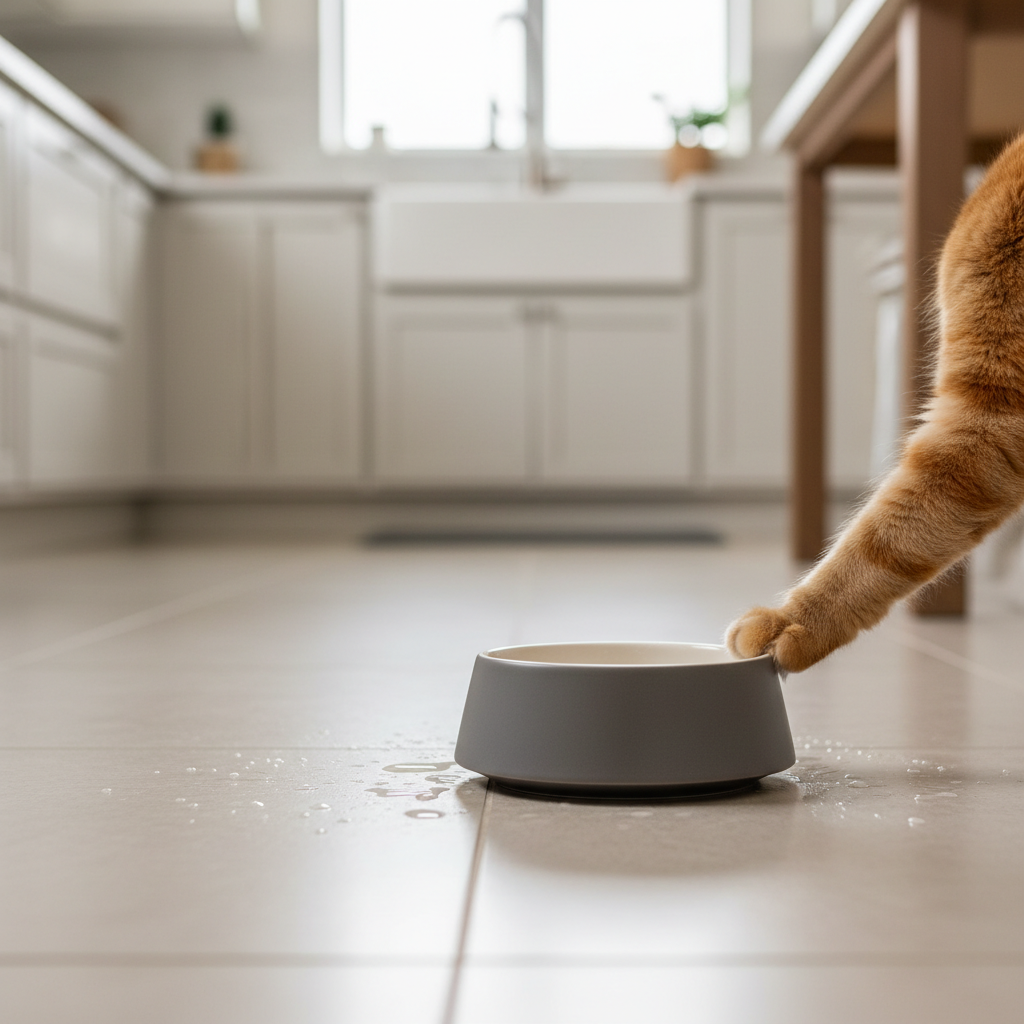
Best cat water bowls non slip picks matter most when your cat drags the dish across the floor, tips it over, or turns every sip into a small puddle. The right bowl usually solves two things at once, fewer spills for you and steadier, more comfortable drinking for them.
But “non-slip” is a fuzzy label. Some bowls rely on a thin silicone ring that still skates on tile, others stay put because they’re heavy enough, and a few are stable but turn into grime traps around rubber seams. If you shop by marketing copy alone, you can end up replacing the bowl again in a month.
This guide breaks down what actually keeps a water bowl from moving, which materials tend to stay cleaner, and how to match bowl style to your cat and your floors. You’ll also get a quick comparison table and a practical checklist so you can decide fast without overthinking it.
What “non-slip” really means (and what it doesn’t)
In real homes, “non-slip” usually comes from one of three mechanisms, and knowing which one you’re buying saves headaches.
- High-friction base: silicone or rubber contact points increase grip on smooth floors. Works well if the base is wide and the material is thick.
- Low center of gravity: wider footprint, flared sides, or a bowl that sits in a cradle reduces tipping.
- Added mass: heavier ceramic or stainless bowls with a weighted ring resist sliding even when nudged.
What it does not guarantee, no splashes. Many cats “lap and flick” water, and a stable bowl can still mean water around the rim. If splashing is the main issue, you may want a deeper bowl, a wider lip, or a small spill mat.
Quick comparison table: common non-slip bowl types
Here’s the short version of how the most common options tend to behave in day-to-day use.
| Type | Slip resistance | Hygiene & cleaning | Best for | Watch-outs |
|---|---|---|---|---|
| Weighted stainless steel + rubber ring | High on tile/wood | Usually easy | Messy drinkers, households with dogs | Rubber ring can trap gunk if not removable |
| Ceramic with silicone base | Medium to high | Very good if glaze is smooth | Style-conscious kitchens, cats sensitive to odors | Chips/cracks can harbor bacteria, heavier if dropped |
| Melamine/plastic with non-slip feet | Low to medium | Varies | Budget buys, travel | Scratches can hold residue; some cats dislike smell |
| Shallow “whisker-friendly” wide bowl with grippy base | Medium | Good if one-piece | Cats that avoid deep bowls | May splash more due to wide opening |
| Raised bowl on a non-slip stand | Medium to high | Depends on stand design | Older cats, cats that prefer elevation | Light stands can wobble; check stability |
How to choose the best non-slip cat water bowl for your home
The “best” option depends more on your floors and your cat’s habits than on brand. A few criteria reliably separate bowls that feel solid from bowls that just look solid online.
1) Match the base to your floor
- Tile, sealed concrete, glossy laminate: prioritize a wide silicone base or a truly weighted bowl. Thin rubber rings often skid.
- Hardwood: avoid bases that can trap water underneath; look for removable rings and wipe under the bowl daily.
- Carpet: “non-slip” matters less than tip resistance. A wider footprint helps more than a rubber ring.
2) Consider bowl height and rim shape
Some cats do better with a slightly elevated bowl, others prefer ground level. According to the American Veterinary Medical Association (AVMA), if you notice behavior changes around eating or drinking, it can be worth discussing with your veterinarian, because discomfort sometimes shows up as subtle avoidance.
For splashing, a gently curved inner wall often keeps water returning to the bowl instead of over the edge.
3) Pick a material you’ll actually keep clean
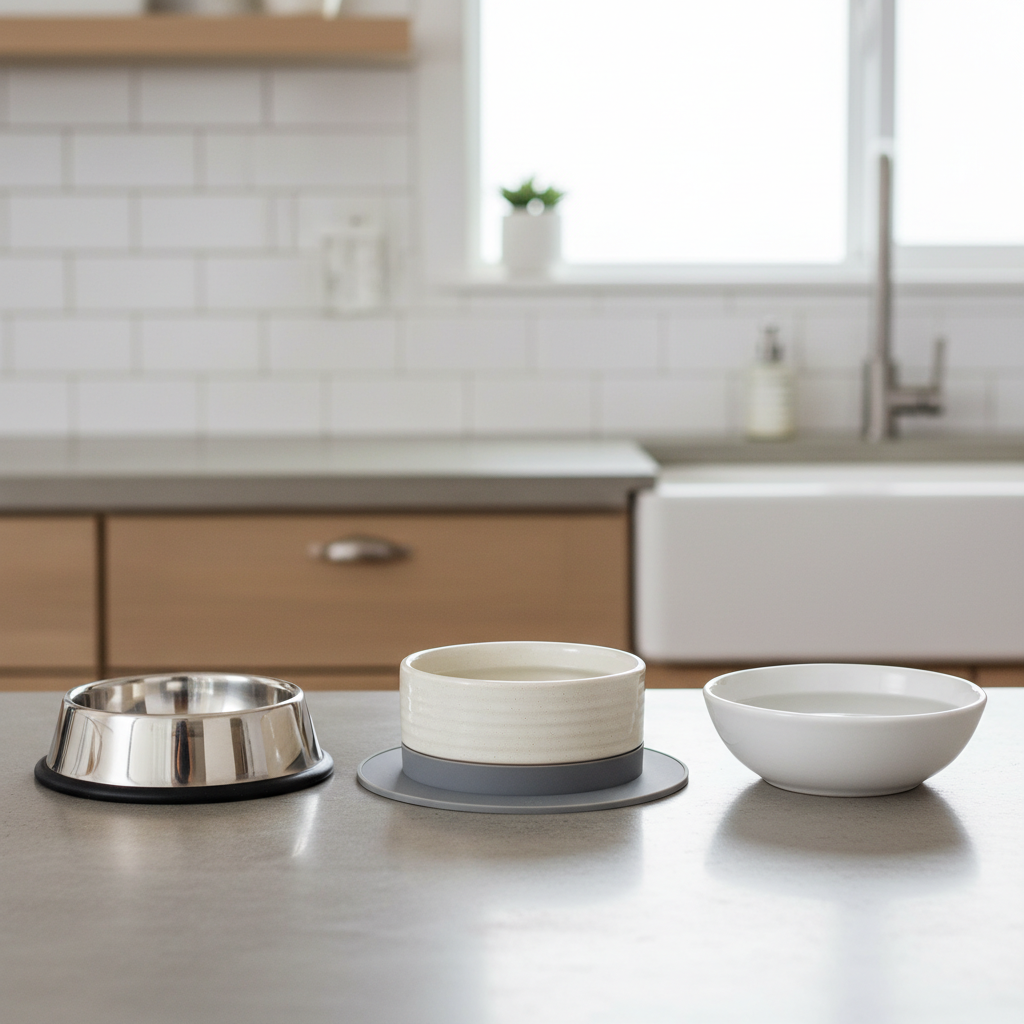
- Stainless steel: durable, less prone to micro-scratches than many plastics, usually dishwasher-safe.
- Ceramic: heavy and stable, but only if the glaze stays intact. Retire the bowl if you see chips or hairline cracks.
- Plastic: can work, but once it gets scratched it may hold odors and residue, and some cats turn picky about it.
If you’re aiming for the best cat water bowls non slip specifically for hygiene, a smooth stainless interior with a removable base ring is a practical default.
Self-check: which bowl style fits your situation?
Use this quick list to decide what feature matters most, without guessing.
- Your bowl slides when your cat drinks: look for a heavier bowl or a full silicone base, not just small feet.
- Your bowl tips when bumped: prioritize a wider footprint, lower center of gravity, or a stand with a broad base.
- You see black grime near the base ring: choose a bowl with a removable ring, or a one-piece silicone-bottom design.
- Your cat drinks but leaves a puddle: try a deeper bowl or a smaller diameter opening, and add a waterproof mat.
- Your cat seems hesitant around water: consider a wider, shallow “whisker-friendly” shape, or talk to a vet if it’s new behavior.
Practical setup steps that reduce spills (even with a good bowl)
A bowl can be stable and still create mess if placement is off. These small tweaks usually make more difference than people expect.
Use a “grip + catch” approach
- Grip: choose one stable bowl (weighted or full silicone base).
- Catch: place it on a low-profile waterproof mat with raised edges.
This combo keeps floors dry and prevents the bowl from slowly migrating across the kitchen during the week.
Find a low-traffic corner
Cats often drink more consistently when the bowl sits away from loud appliances and foot traffic. If you keep bumping the bowl yourself, you’ll never see how non-slip it truly is.
Wash and refresh more often than you think
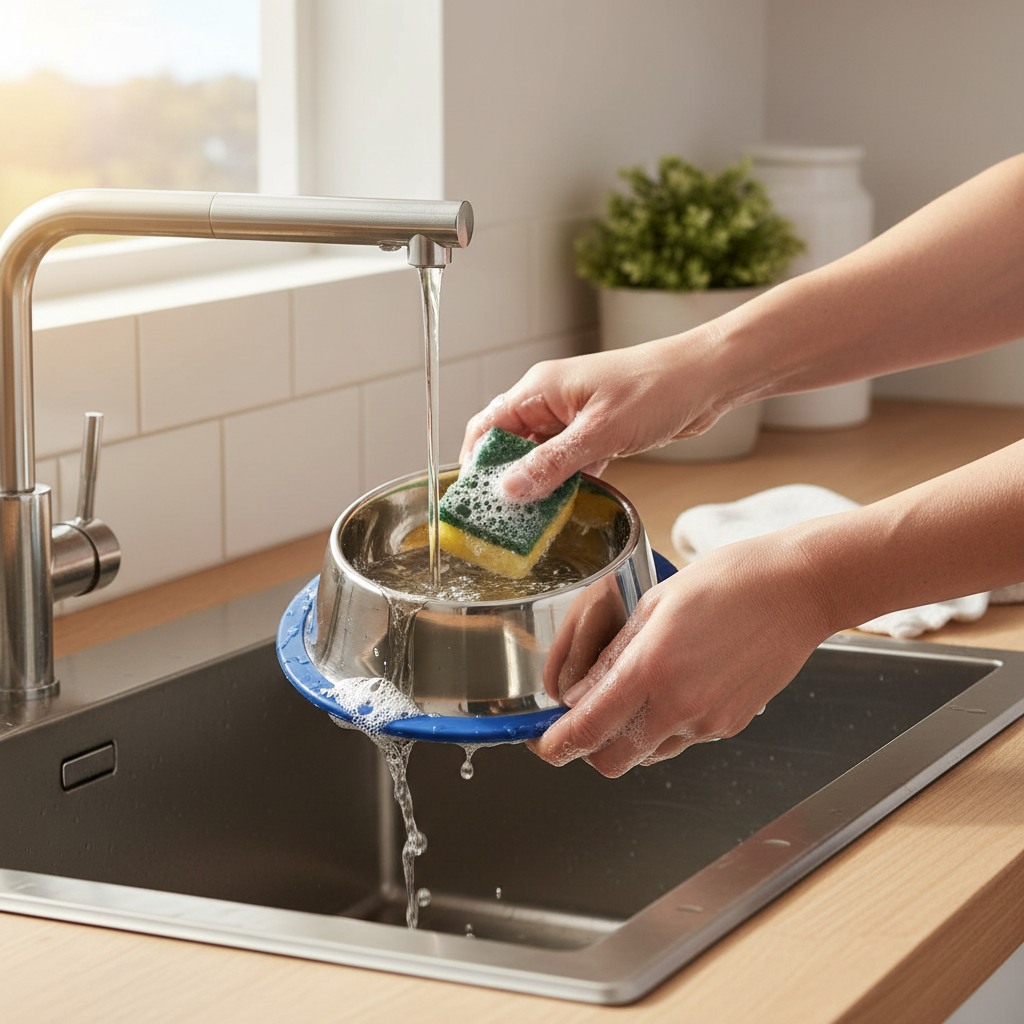
According to the U.S. Food and Drug Administration (FDA), pet food and water dishes should be washed regularly to reduce bacterial contamination risk. Many households do fine with daily rinsing and frequent soap-and-water washing, but frequency can vary based on how quickly bowls get slimy, how many pets you have, and whether you use wet food nearby.
Common mistakes when shopping for non-slip cat water bowls
These are the traps that lead to “why is this still sliding” frustration.
- Assuming any rubber ring equals stability: thin rings can harden over time, especially if they go through hot dishwasher cycles.
- Buying a huge capacity bowl for convenience: big and shallow can increase splashing, big and deep can bother whiskers, you want the shape to match behavior.
- Ignoring seam design: a base that traps moisture turns into a cleanup chore, and it can smell.
- Keeping damaged ceramic: chips and cracks are easy to miss, and that’s where residue can stick.
Key takeaways + recommended “shortlist” by scenario
If you want a simple decision path, this is the one I’d use.
- Most homes (tile/laminate): weighted stainless steel bowl with a removable non-slip ring.
- Chronic tippers: wide-base ceramic or a stable raised stand with a broad footprint.
- Hygiene-first: smooth stainless interior, minimal seams, dishwasher-safe parts.
- Whisker-sensitive cats: shallow wide bowl, but pair with a mat to handle extra splash.
In many cases, the best cat water bowls non slip are the ones that combine weight + a truly grippy base, while staying simple to clean. If you have to fight the bowl during washing, it won’t stay “best” for long.
Conclusion: pick stability you can maintain
Non-slip is less about a label and more about a stable base, a sensible shape, and a material you’ll keep clean without resentment. Start by matching the bowl to your floors, then choose the easiest-to-wash design that still stays put when nudged.
If you want one action step today, do this: check whether your current bowl slides, tips, or just splashes, then buy to solve that single problem, not every problem at once. Your kitchen stays drier, and your cat usually settles into the new setup quickly.
FAQ
What is the best material for a non-slip cat water bowl?
Stainless steel is a common safe pick because it’s durable and easy to clean, especially when paired with a removable non-slip ring or a weighted base. Ceramic can also be great if the glaze stays intact and you replace it if chipped.
Do silicone-bottom bowls work on tile floors?
Often, yes, but it depends on how wide and thick the silicone contact area is. Small silicone “dots” or thin rings may still skate on smooth tile when a cat pushes hard.
Why does my cat move the water bowl around?
Some cats paw at water out of curiosity, others brace the bowl to drink, and some are reacting to bowl shape or placement. If it’s a new habit or comes with reduced drinking, consider checking with a veterinarian.
Are raised water bowls better for cats?
It varies by cat. Some older cats seem to prefer a little elevation, while others don’t care. The bigger issue is stability, a raised bowl on a light stand can wobble and still spill.
How do I stop water from splashing out while my cat drinks?
Try a bowl with a slightly deeper profile or a narrower drinking opening, and use a waterproof mat as backup. If your cat plays in the water, you may need to experiment with shape more than base grip.
Can a non-slip rubber ring cause hygiene issues?
It can if moisture and debris collect under the ring. Bowls with removable rings or one-piece silicone bottoms are usually easier to keep clean.
How often should I wash my cat’s water bowl?
Many households do well with daily rinsing and regular soap-and-water cleaning, but it depends on how fast the bowl gets slimy and how many pets share it. According to FDA guidance, regular washing helps reduce contamination risk.
If you’re trying to choose between a few options and want a more “set it and forget it” setup, start with a weighted stainless bowl plus a low-edge waterproof mat, it’s usually the least fussy route and works in a lot of U.S. homes.