
Best cat food for urinary health usually means a diet designed to support a healthy urine pH and reduce excess mineral load, so crystals and stones become less likely in many cats.
If you have ever dealt with a cat that strains in the litter box, urinates outside it, or cycles through “UTI” suspicions that turn out to be something else, you already know how stressful urinary problems feel. The tricky part is that food can help a lot in some cases, and barely move the needle in others.
This guide focuses on how urinary diets actually work, how to tell whether your cat is a good candidate, and how to pick between prescription and over-the-counter options without getting lost in marketing claims. I will also flag the moments where food is not the right “fix,” and a vet visit matters more than another bag of kibble.
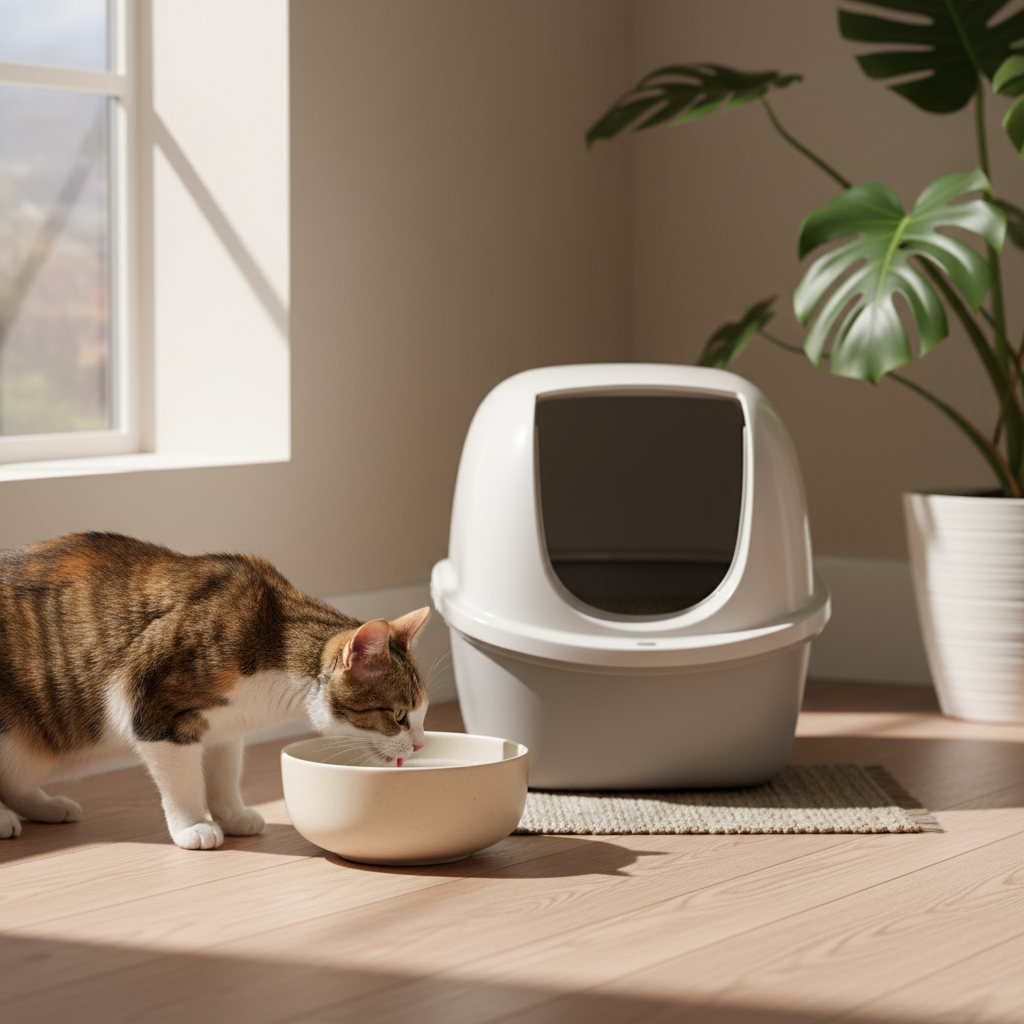
Why urinary issues happen, and where food fits
Most “urinary health” conversations revolve around three buckets: crystals, stones, and lower urinary tract inflammation. They overlap, but they are not identical, which is why the right food depends on the diagnosis.
- Struvite crystals/stones: Often tied to urine that trends more alkaline and urine that stays concentrated. Diets may aim to encourage a more acidic urine range and dilute urine.
- Calcium oxalate stones: These are not “dissolved” by diet in the same way struvite stones sometimes can be. Food may focus on prevention strategies, but management can be more individualized.
- FIC (feline idiopathic cystitis): Inflammation with no single clear cause. Stress, low water intake, and environment can matter as much as the label on the bag.
According to the American Veterinary Medical Association (AVMA), cats showing urinary blockage signs need prompt veterinary care, because obstruction can become life-threatening. That is why “urinary food” should be a plan, not a substitute for urgent evaluation.
What “urinary health” cat food is designed to do
When a label mentions urinary support, the formula typically targets a few practical levers. Some are obvious, some are buried in the ingredient panel and mineral analysis.
1) Increase water intake (directly or indirectly)
Higher moisture intake usually means more urine volume, which can help dilute minerals and irritants. Wet food does this naturally, and some kibbles add sodium to encourage drinking, though that is not ideal for every cat.
2) Manage urine pH
Many urinary diets aim for a urine pH range that makes certain crystal formation less likely. This is not a do-it-yourself target, since pH goals differ by crystal type.
3) Control mineral levels that contribute to crystal formation
Look for controlled magnesium, phosphorus, and calcium in the guaranteed analysis or nutrition information, especially for cats with a known crystal history.
4) Support the bladder lining and inflammation
Some formulas include omega-3s, antioxidants, or glycosaminoglycan-supporting ingredients. Helpful for certain cats, but not magic.
Prescription vs. over-the-counter: which one is “best” in 2026?
For many cats with confirmed stones, recurrent crystals, or a history of blockage, prescription urinary diets are often the most predictable option, because they are formulated to meet specific urine chemistry targets. Over-the-counter foods can still help, but the effect size varies more by brand and by cat.
According to the American Animal Hospital Association (AAHA), therapeutic diets can play a meaningful role in managing certain conditions when used under veterinary guidance. In practice, that usually means: if your vet has identified struvite crystals or a stone risk pattern, a prescription diet is commonly on the table.
- Prescription diets: Better for cats with documented disease, recurring episodes, or post-blockage management; requires vet involvement.
- Over-the-counter urinary-support diets: Often reasonable for “mild history,” prevention in at-risk cats, or when the cat refuses prescription options, with monitoring.
The “best cat food for urinary health” for your household is the one your cat will eat consistently, that fits the diagnosis, and that you can keep feeding without constant switching. Consistency matters more than people expect.
A quick comparison table: what to look for on the label
Packaging rarely tells the whole story, but it can help you shortlist. Here is a practical way to compare foods when you are standing in the aisle or scrolling online.
| What to check | What you want (often) | Why it matters |
|---|---|---|
| Moisture (wet vs dry) | Higher moisture when possible | Dilutes urine, supports hydration routines |
| Minerals | Controlled Mg/P/Ca | May reduce crystal “building blocks” |
| Urinary claim | Clear urinary support statement, ideally with vet guidance | Suggests the formula was designed for urine chemistry goals |
| Sodium | Moderate, not extreme | Sometimes used to encourage drinking, not great for every cat |
| Calories | Matches your cat’s body condition plan | Extra weight can worsen inflammation and mobility, which can affect litter box use |
| Transition tolerance | GI-friendly, palatable | Food refusal or diarrhea can derail the plan |
Self-check: is your cat a good candidate for a urinary diet?
This is the part most people skip, and it is why they end up switching foods every month. Use this as a quick sorting tool, not a diagnosis.
- Higher priority for a vet-guided urinary plan: history of urethral blockage, visible blood in urine, confirmed crystals/stones on urinalysis or imaging, repeated urgent litter box trips.
- Maybe helpful, depending on context: one-off urinary episode years ago, stress-related flare-ups that improve with hydration and routine, “strong-smelling urine” without other signs.
- Food alone likely not the answer: sudden inability to pass urine, severe lethargy, vomiting with urinary signs, pain when picked up, dramatic behavior changes.
If you are not sure what type of crystals or stones were involved, ask your vet for the urinalysis summary. That single sheet usually clarifies more than any review site.

How to choose the best cat food for urinary health (step-by-step)
You do not need a perfect plan, you need a workable one that you can keep steady for weeks, then reassess with your vet if symptoms repeat.
Step 1: Confirm what you are managing
If your cat has had urinary signs, a urinalysis matters. Crystal type, urine concentration, and signs of infection steer the diet choice. Many “UTI” assumptions in cats end up being inflammation rather than bacterial infection, so guessing can send you in circles.
Step 2: Pick wet, dry, or a hybrid based on your cat’s reality
- Wet-only: Often easiest for hydration, may cost more, sometimes better tolerated in multi-cat homes where you can portion.
- Dry-only: Convenient, can work for some cats, but you usually need a stronger water strategy.
- Hybrid: A practical middle ground, especially if your cat is a kibble fanatic.
Step 3: Decide whether you need prescription
If your cat has a blockage history or confirmed stones, prescription diets are commonly the safer bet. If you are in prevention mode, an over-the-counter urinary-support formula may be reasonable, with monitoring and vet input if signs return.
Step 4: Transition slowly and track litter box behavior
A gradual transition over 7–10 days reduces GI upset. Keep a simple note for two weeks: clump size, frequency, straining, and any accidents. When symptoms are subtle, this log helps you see patterns without guesswork.
Practical add-ons that often matter as much as the food
Even the best formulation struggles if water intake stays low or stress stays high. A few small changes can be surprisingly influential for cats prone to lower urinary tract flare-ups.
- Water setup: wide bowls, multiple stations, fresh water daily, try a fountain if your cat likes moving water.
- Litter box basics: enough boxes, easy access, scooped daily; cats that “hold it” can worsen concentration.
- Stress reduction: predictable feeding times, safe hiding spots, slow introductions between cats.
- Treat discipline: keep treats under control, because too many “extras” can dilute the intended mineral balance.
According to the American Association of Feline Practitioners (AAFP), environmental enrichment and stress management can be important for cats with lower urinary tract disease, especially when episodes correlate with household changes.
Common mistakes that make urinary diets look like they “don’t work”
- Switching foods too fast: A few days is rarely enough time to see a stable pattern, and GI upset can complicate litter box behavior.
- Mixing multiple foods randomly: Rotating brands and flavors might be fun, but it can defeat the purpose of a targeted formula.
- Assuming all urinary problems are infection: Many cats have inflammation without bacteria, so antibiotics and “cranberry-style” logic do not always apply.
- Ignoring water: Dry urinary kibble plus a single small bowl in a quiet corner often underperforms.
- Overcorrecting with supplements: Acidifiers and minerals can backfire if the underlying issue is different than you think.
When to seek professional help (don’t wait on food)
If your cat cannot pass urine, cries in the box, or keeps attempting to pee with little output, treat it as urgent. Male cats are at higher risk for obstruction, but any cat can deteriorate quickly.
- Repeated trips to the litter box with minimal urine
- Visible blood in urine, especially with lethargy or hiding
- Vomiting, collapse, or severe pain
- History of obstruction and any return of straining
A veterinarian may recommend urinalysis, imaging, and a tailored diet plan. That can include prescription food, pain control, hydration support, and environmental changes, depending on what is found.
Key takeaways (so you can act today)
- Match the food to the diagnosis, because “urinary” is a broad category.
- Prioritize hydration, especially if your cat eats mostly dry food.
- Prescription diets often make sense for confirmed stones, crystals, or post-blockage management.
- Consistency beats constant switching, track litter box patterns for two weeks before judging.
Conclusion: picking a urinary diet without overthinking it
The best cat food for urinary health in 2026 is less about chasing a trendy ingredient and more about getting the basics right: appropriate moisture, controlled minerals, a plan that fits your cat’s specific risk, and a routine you can sustain. If you have any uncertainty about stone type or your cat’s current symptoms, it is worth bringing your vet into the decision, because the “wrong” urinary strategy can waste time when your cat needs clarity.
If you want a simple starting point, choose a urinary-support wet or hybrid option your cat reliably eats, tighten up water access around the house, and schedule a check-in if signs repeat or worsen.
FAQ
- What is the best cat food for urinary health if my cat only eats dry kibble?
Look for a urinary-support formula with controlled minerals, then aggressively support water intake with multiple bowls or a fountain. Many cats do fine on dry, but the hydration piece becomes non-negotiable. - Can wet food alone prevent urinary crystals?
Wet food can help by increasing water intake, which may reduce urine concentration, but prevention still depends on crystal type, minerals, and your cat’s individual risk. If crystals were confirmed before, ask your vet whether a therapeutic diet is warranted. - Do urinary foods dissolve stones?
Some prescription diets may dissolve certain struvite stones under veterinary supervision, but other stone types, like calcium oxalate, typically do not dissolve through diet alone. Imaging and lab work guide this. - Is “grain-free” better for urinary health?
Not automatically. Urinary support is more about moisture, mineral balance, and urine chemistry than whether a food contains grains. Grain-free can be fine, but it is not a urinary strategy by itself. - How long does it take to see results after switching to a urinary diet?
For many cats, you might notice litter box changes within a few weeks, but it varies. If symptoms are acute or severe, do not wait on the food to “kick in,” get veterinary care. - Should I add cranberry supplements for my cat’s urinary tract?
Cranberry is often discussed for humans, but cats are different and many feline urinary cases are not bacterial infections. Talk with a veterinarian before adding supplements, especially if your cat has a stone history. - Can treats or table scraps interfere with a urinary diet?
Yes, especially with prescription diets. Extra foods can alter mineral intake and undermine the intended urine chemistry goals, so keep treats limited and diet-consistent.
If you are trying to choose between a prescription urinary diet and an over-the-counter option, or your cat’s symptoms keep returning even after switching foods, it may be easier to bring a short food list and your litter box notes to your vet and build a plan that fits your cat and your budget.