
Dog Outdoor Bed Weather Resistant & Waterproof: What Actually Matters
Dog outdoor bed weather resistant shopping sounds simple, until you realize “outdoor” can mean a shaded patio in Arizona, a wet deck in Seattle, or a camping trip with sharp gravel underfoot. The right pick depends less on marketing words and more on a few practical details: fabric coating, seams, fill type, and how the cover handles grime.
If your dog drags a bed through muddy paws, flops down while still damp, or you leave the bed outside longer than you meant to, small design choices start to matter fast. A bed that stays comfortable and doesn’t turn into a smelly sponge saves you time, money, and a lot of side-eye from your dog.
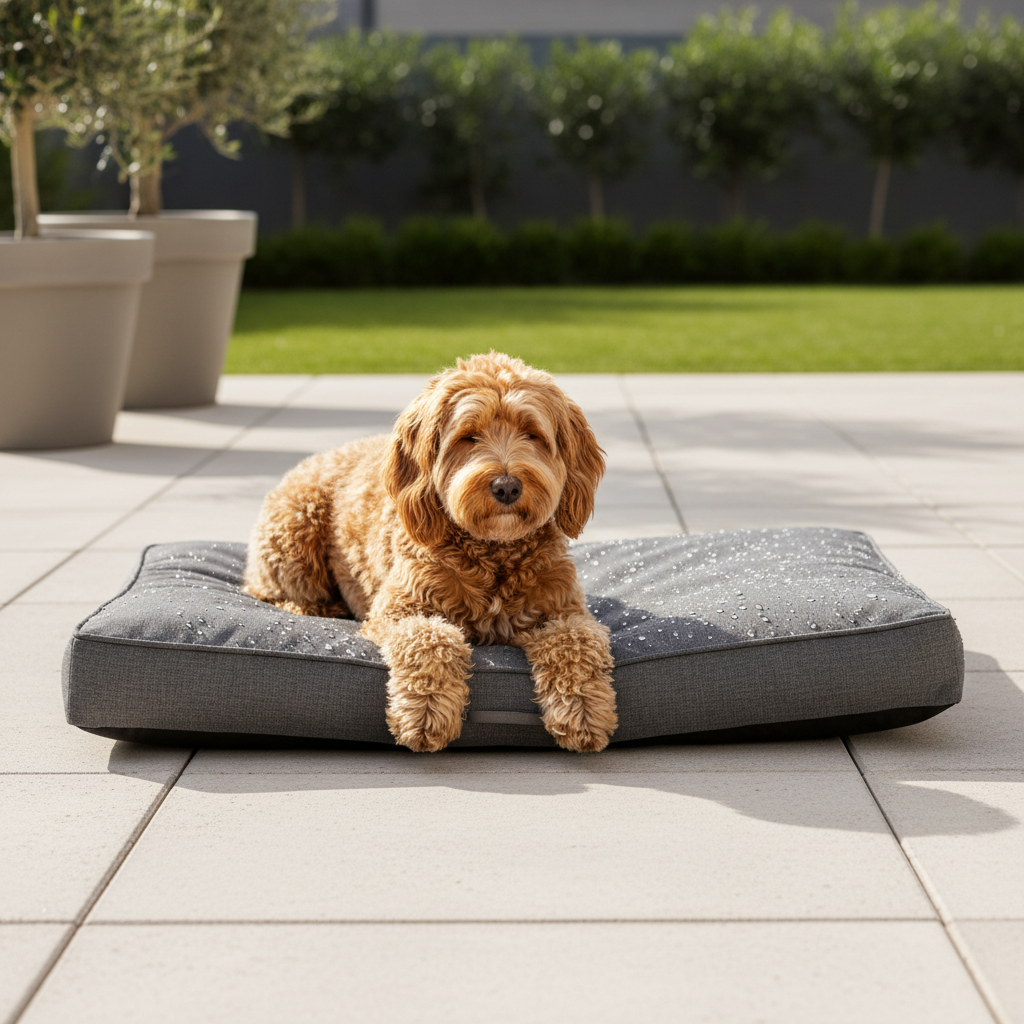
This guide breaks down what “weather resistant” and “waterproof” usually mean in real life, how to quickly judge a bed before you buy, and what to do if the bed you already own keeps getting gross. I’ll also flag the common traps, like beds that resist rain but trap heat, or “waterproof” covers that crack after one season.
Weather resistant vs. waterproof: the difference people miss
Most brands blend these terms, but they behave differently outdoors. Weather resistance usually means the surface sheds light rain and dries relatively fast, while waterproofing means water cannot pass through the barrier layer, even with pressure.
- Weather resistant: good for splashes, dew, brief drizzle, and shaded patios, but seams and zippers may leak, and the inner fill can still absorb moisture over time.
- Waterproof: better for wet decks, boat days, and repeated soaking, but it can feel less breathable, which matters in hot climates.
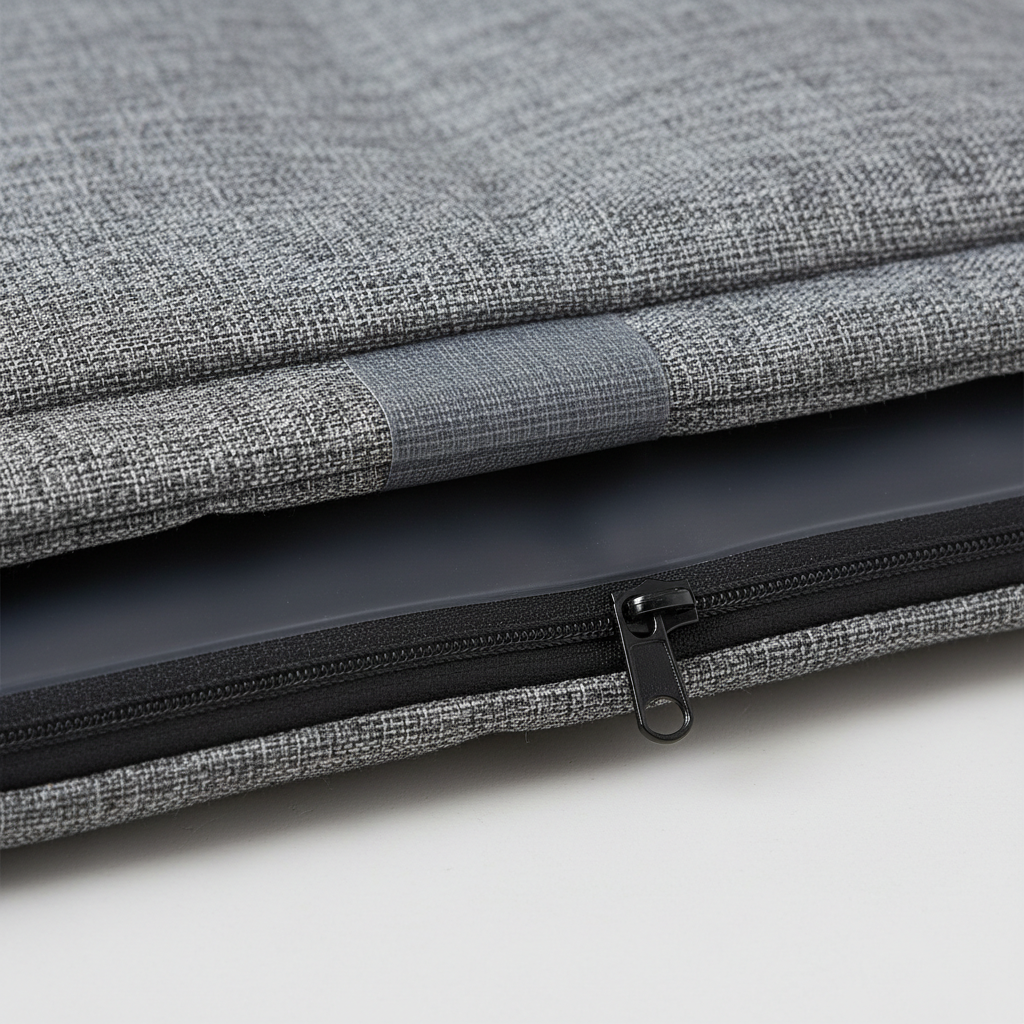
One more nuance: a bed can be “waterproof” on the fabric panel yet still fail at stitching lines. If you’ve ever seen water seep through a zipper line, that’s why “waterproof fabric” alone doesn’t guarantee a truly sealed build.
Why outdoor dog beds fail outdoors (and how to spot the cause)
When people say an outdoor bed “didn’t last,” it’s usually one of these failures, not a mystery. The good news is you can often predict the weak point before purchase.
- Seam leakage: stitched seams without seam tape allow moisture into the fill, leading to mildew smell.
- Wrong fill: shredded foam and cotton blends can hold water, then stay damp for days.
- UV breakdown: dark covers can fade and coatings can get brittle under strong sun.
- Bottom abrasion: thin bases tear on concrete texture, pavers, or gravel.
- Heat trapping: fully sealed waterproof layers can run hot, especially for thick-coated breeds.
According to the American Veterinary Medical Association (AVMA), dogs are at risk for heat-related illness in warm conditions, so anything that traps heat outdoors deserves extra caution, especially for brachycephalic breeds or seniors. If your dog avoids the bed on hot days, that may be a comfort and safety signal, not “pickiness.”
A quick self-check: what kind of outdoor setup do you actually have?
Before you filter products, get honest about how the bed will be used. These questions usually narrow the field in under a minute.
- Exposure: will it sit under a covered patio, or in open rain and sun?
- Ground: smooth deck boards, rough concrete, pavers, grass, or gravel?
- Moisture source: rain, pool water, sprinkler overspray, wet paws, or all of the above?
- Time outside: brought in nightly, or left outdoors for days at a time?
- Dog behavior: digger, chewer, “spins three times,” or calm flopper?
If your answers lean toward open exposure plus rough ground, prioritize a dog outdoor bed weather resistant build with a reinforced bottom, sealed seams, and an easy-clean cover. If it’s mostly shade and occasional damp paws, you can trade some waterproofing for better breathability.
Materials that hold up: what to look for (and what to avoid)
Outdoor performance comes from materials, not adjectives. Here’s the short list that tends to make or break durability.
Cover fabric and coating
- Polyester with TPU backing: often balances water blocking and flexibility, usually less “crackly” than some vinyl-like options.
- Solution-dyed acrylic: typically strong for sun exposure and fading, often used in outdoor furniture, though true waterproofing may still require a backing layer.
- Ballistic nylon / heavy denier fabrics: helpful for abrasion and dogs that paw at beds, but check if it’s treated for water.
Be cautious with “waterproof” covers that feel stiff like a rain jacket from years ago. Many dogs dislike that texture, and some coatings can wear into micro-cracks after repeated flexing.
Inner fill
- Closed-cell foam: resists absorbing water, dries faster, often a solid choice for truly wet environments.
- Solid slab foam (with a waterproof liner): supportive, but only if the liner is well-built and the cover doesn’t trap moisture inside.
- Fiberfill: can feel cozy, but can clump and hold moisture, especially if water gets past seams.
Base and feet
- Non-slip and abrasion-resistant bottom: helps on decks and concrete, and reduces tearing.
- Raised cots: great airflow and keeps the sleeping surface away from puddles, though they can feel less cozy for dogs that like “nesting.”
Comparison table: match features to your outdoor scenario
Use this table as a quick sanity check. It’s not about perfection, it’s about reducing the ways the bed can fail in your specific spot.
| Outdoor scenario | Best-fit features | Trade-offs to expect |
|---|---|---|
| Covered patio, light splashes | Weather-resistant cover, removable washable cover, quick-dry fill | May not handle prolonged rain |
| Open deck, frequent rain | Waterproof barrier + sealed seams, durable bottom, mildew-resistant materials | Can run warmer, needs airing out |
| Poolside or boat days | True waterproof liner, closed-cell foam, easy rinse surface | Less plush “sofa” feel |
| Hot sun exposure | UV-stable fabric, breathable design, lighter colors, cot-style airflow | Breathable often means less waterproof |
| Rough concrete / pavers | Reinforced base, high-denier fabric, replaceable cover | Heavier, sometimes pricier |
Buying checklist: how to judge a bed in 90 seconds
When you’re scanning listings, focus on the details that companies can’t fake with lifestyle photos.
- Seams: look for mention of seam taping or sealed construction if you need real waterproofing.
- Zipper protection: covered zippers or storm flaps reduce leakage and gunk buildup.
- Removable cover: “wipe clean” sounds great until you meet dried drool plus pollen.
- Care instructions: if it can’t be washed or rinsed, it will smell sooner outdoors.
- Bottom panel: abrasion-resistant or reinforced fabric matters more than people expect.
- Size + posture: measure your dog’s lounging length, then add space if they sprawl.
If you’re stuck between two options, pick the one that makes cleaning easier. Outdoor beds rarely fail because they’re not soft enough, they fail because they become a chore.
Practical care: keep it odor-free and extend its lifespan
Even the best dog outdoor bed weather resistant build benefits from a simple routine. You don’t need perfection, just consistency.
- Weekly shake-out: remove dirt and plant debris before it grinds into seams.
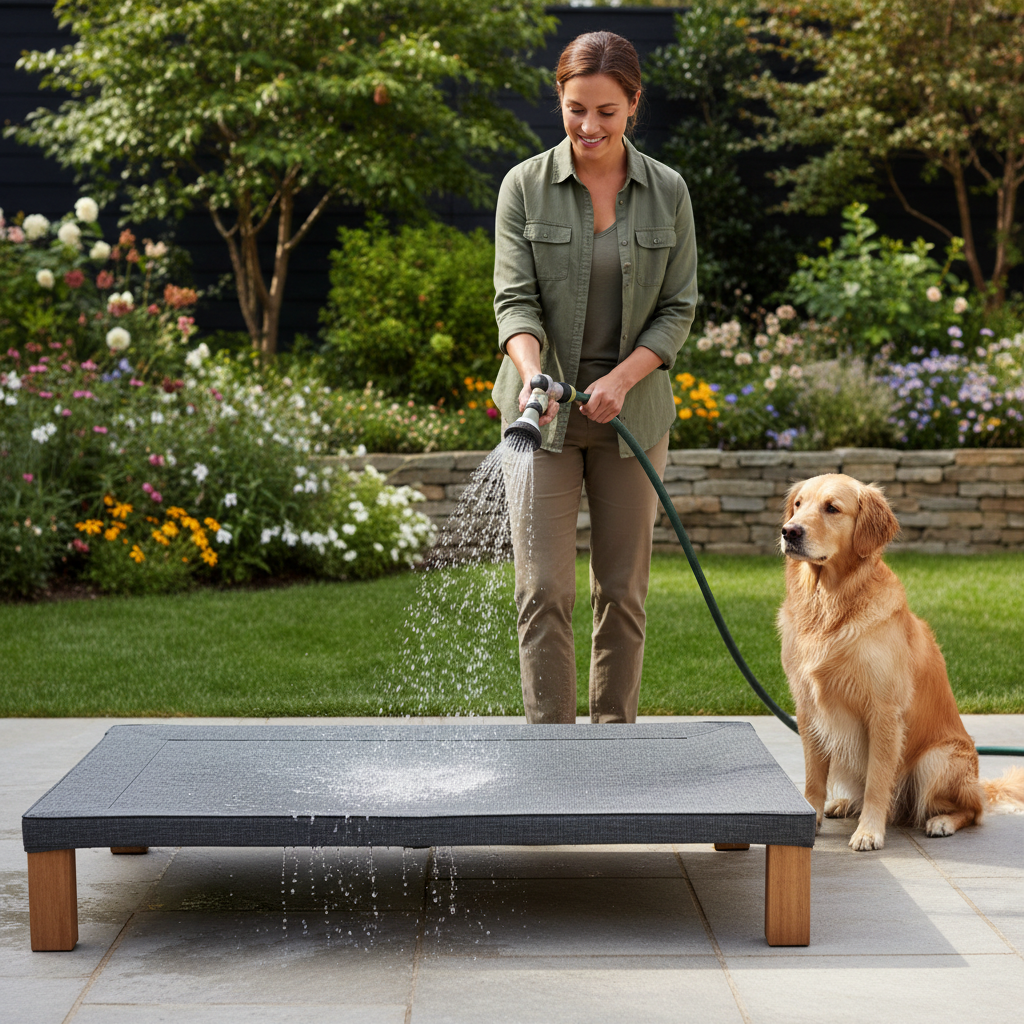
- Quick rinse after storms: if your bed sits in pollen-heavy or salty air areas, a light rinse helps fabric last longer.
- Air it out: after heavy rain or a wet-dog day, unzip and let moisture escape.
- Rotate placement: moving the bed a few feet can reduce constant sun on one edge and slow UV wear.
If you notice a persistent musty smell, it often means moisture reached the inner fill. At that point, washing only the cover helps less than you’d hope, you may need to dry or replace the insert.
Common mistakes (that waste money fast)
- Assuming “waterproof” means breathable: many fully sealed layers hold heat, which can be uncomfortable, and in some situations may increase overheating risk.
- Ignoring the underside: tops look tough, bottoms rip, then water and dirt enter from below.
- Leaving it out 24/7: even outdoor-rated fabrics age faster when they never get a break from sun and rain.
- Buying too thick for your climate: plush beds can stay damp longer, especially in humid regions.
- Not planning for your dog’s habits: diggers and chewers need tougher textiles and fewer exposed edges.
When to consider professional help or a different setup
If your dog has joint pain, mobility limits, or skin issues, an outdoor bed choice becomes more than convenience. According to the American Animal Hospital Association (AAHA), comfort and pain management are key parts of caring for older pets, and bedding can be part of that bigger picture. If you’re unsure what thickness or firmness is appropriate, asking your veterinarian can be a sensible next step.
Also rethink the setup if your dog repeatedly comes inside soaked, shivering, or excessively panting after resting outdoors. Bedding can help, but it can’t fix unsafe weather exposure, and in extreme heat or cold, limiting outdoor time may be the safer call.
Conclusion: pick the bed that fits your weather, not the label
A dog outdoor bed weather resistant option is worth it when it matches your real conditions: sun level, ground texture, moisture frequency, and how your dog actually uses the bed. Start with seam quality and cleanability, then decide how much waterproofing you truly need, because the most sealed beds can be less comfortable in warm climates.
Action steps: choose one primary use case (covered patio vs. open rain), run the 90-second checklist, then commit to a simple rinse-and-air routine so the bed stays fresh instead of turning into a weekend project.
FAQ
What does “weather resistant” mean for an outdoor dog bed?
It usually means the cover sheds light moisture and handles sun better than indoor fabrics, but seams and zippers may still let water reach the inside during heavy or prolonged rain.
Is a waterproof outdoor dog bed always better?
Not always. Waterproof barriers can trap heat and feel less breathable, so for hot states or covered patios, a more breathable, quick-dry bed can be the more comfortable choice.
How do I know if the seams will leak?
Look for sealed or taped seams in the description, and check photos for zipper flaps. If a listing only says “waterproof fabric,” assume seams may be the weak point.
What fill is best if my dog comes in wet from rain or swimming?
Closed-cell foam or inserts designed not to absorb water tend to dry faster. Traditional fiberfill can stay damp and develop odor in many climates.
Can I leave an outdoor dog bed outside all year?
Some can handle it, but many will age faster with constant UV and moisture exposure. Bringing it in during storms or at night often extends lifespan noticeably.
How should I clean a weather resistant dog bed?
Start with shaking out debris, then rinse or wipe the cover based on care instructions. If odor persists, the inner insert may need drying time or replacement, not just a cover wash.
Are elevated outdoor dog beds good in rain?
They can be, because airflow helps drying and the surface stays off wet ground. In heavy wind-driven rain, though, you still want a quick-dry or water-resistant surface.
If you’re trying to narrow down options, it often helps to write your “non-negotiables” on one line, like sealed seams for an open deck, or breathable fabric for a hot patio, then shop around that instead of chasing every feature at once.