
Cat food bowl non slip choices matter more than most people think, because a bowl that skates across the floor or tips mid-meal turns feeding time into a daily mess and, for some cats, a real annoyance.
If you are dealing with spilled kibble, splashed water, or a cat that “pushes” the bowl around the room, the fix usually is not training, it is matching the bowl base, weight, and shape to your floors and your cat’s eating style.
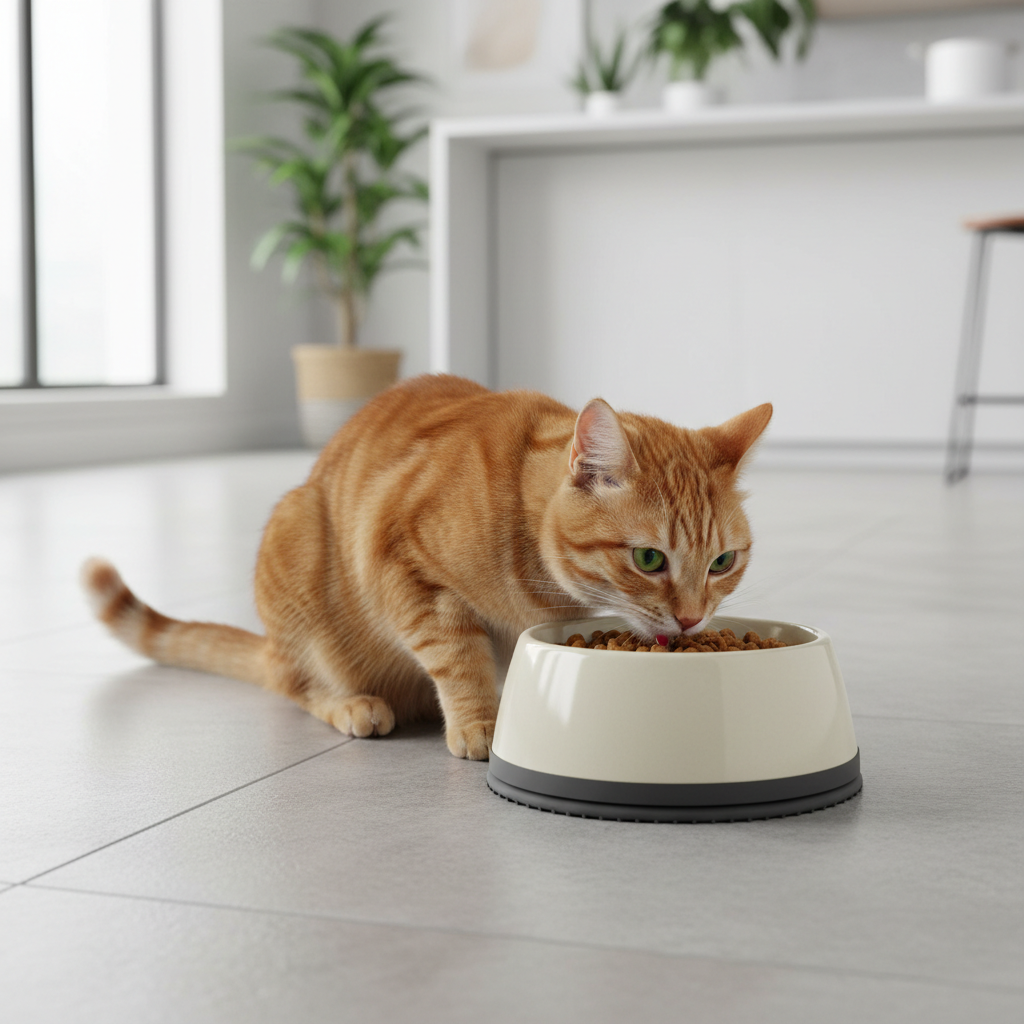
This guide breaks down why bowls slip and tip, how to tell what kind of stability problem you actually have, and what to buy or change without overcomplicating it. I will also call out common “non-slip” claims that look good online but fail on real floors.
Why cat bowls slip or tip in the first place
Most slipping is not about the cat being “messy,” it is basic physics plus behavior. Cats often eat with short, forward nudges, and a lightweight bowl transfers that force into motion.
- Slick flooring: tile, sealed hardwood, and laminate reduce friction, so even decent bowls can drift.
- Too-light bowls: thin plastic or small stainless bowls move easily, especially with dry food that does not add weight.
- Narrow base: a tall bowl or one with a small footprint becomes easier to tip when a cat hooks the rim.
- Food “chasing”: when kibble scatters to the edges, some cats push the bowl to “bring food back.”
- Mat mismatch: some silicone mats slide on dust, or curl at the edges and actually help the bowl flip.
According to AVMA (American Veterinary Medical Association), sudden changes in appetite or eating behavior can sometimes signal underlying issues, so if your cat starts pawing, flinging food, or avoiding the bowl out of nowhere, it may be worth checking in with a veterinarian.
Quick self-check: what kind of problem do you have?
Before you buy another “grippy” bowl, try to classify the issue. You will pick a better fix in about two minutes.
- Sliding: bowl stays upright but travels across the floor.
- Tipping: bowl flips or lifts on one side when your cat eats.
- Spilling without movement: bowl stays put, but the rim shape lets food or water escape.
- Mat migration: the bowl stays on the mat, but the mat slides.
A simple test helps: put the bowl where you normally feed, press the rim sideways with one finger, and watch what moves first. If the bowl glides, you need better friction. If it rocks or lifts, you need a wider or heavier base.
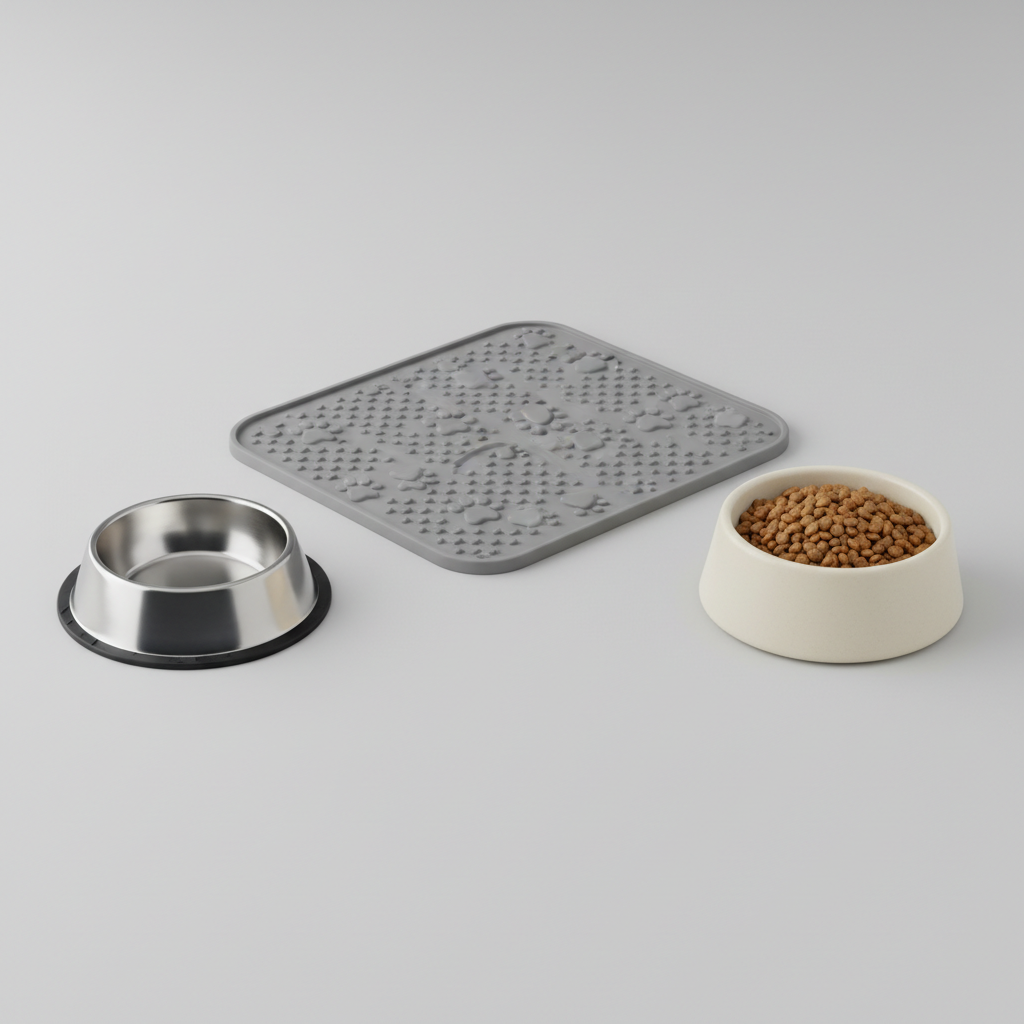
What to look for in a cat food bowl non slip design
“Non-slip” can mean a lot of different things on listings. In practice, stability usually comes from a combination of base material, bowl weight, and footprint.
Base grip: rubber ring vs full silicone base
- Rubber ring: common on stainless bowls, works well on tile and sealed wood if the ring is thick and does not harden.
- Full silicone base: more surface contact, often better on very slick floors, but can attract lint and lose grip if not cleaned.
Weight and center of gravity
- Weighted stainless: good middle ground, easier to clean than porous materials.
- Ceramic: often the most stable due to weight and wide bases, but can chip if dropped.
- Plastic: tends to slide unless paired with a strong base, and scratches can trap residue over time.
Footprint and shape
If tipping is your problem, prioritize a wide base. Shallow, wide bowls can also reduce “food chasing” and, for some cats, make eating more comfortable. (If you suspect whisker stress, a vet can help you assess it; behavior varies by cat.)
Anti-tip and non-slip options compared (table)
Not every household needs the same setup. Here is a practical comparison to narrow it down.
| Option | Best for | Pros | Watch-outs |
|---|---|---|---|
| Stainless bowl with rubber ring | Sliding on tile/wood | Easy cleaning, affordable, decent grip | Ring can loosen; lightweight models still drift |
| Weighted stainless bowl | Sliding + mild tipping | Stable, durable, dishwasher-friendly (often) | Check base grip quality; some “weights” are minimal |
| Wide-base ceramic bowl | Tipping, energetic eaters | High stability, wide footprint | Can chip; confirm it sits flat on your floor |
| Silicone feeding mat + bowl | Mess control + mild sliding | Catches spills, protects floors | Mat may slide if dusty; curled edges can cause tipping |
| Raised stand with inset bowl | Neat setup, some cats prefer height | Limits bowl movement, clean look | Needs non-slip feet; wrong height may not suit every cat |
Practical fixes you can try today (before buying anything)
Sometimes you can solve the problem with what you already own, especially if the issue is a mat or floor mismatch.
- Clean the base and the floor spot: oils and dust reduce grip, even on good rubber.
- Switch surfaces: place the bowl on a textured runner or a low-pile rug square you can wash.
- Try a heavier bowl temporarily: if you have a small ceramic dish, test it for one meal to see whether weight solves it.
- Use a wide, shallow bowl: helps if the cat is pushing food around to reach the last pieces.
- For water bowls: fill to a sensible level, overfilling increases slosh and makes “spills” look like “sliding.”
Buying checklist: pick the right setup for your home and cat
If you are shopping, keep the decision grounded in your floor type and the specific failure mode you saw in the self-check.
If the bowl slides but never tips
- Choose a cat food bowl non slip with a thick rubber ring or full silicone bottom.
- Aim for a slightly larger diameter so the base contact area increases.
- If you use a mat, pick one with a grippy underside and enough weight to stay flat.
If the bowl tips or rocks
- Prioritize a wide base and lower center of gravity, ceramic often performs well here.
- Avoid narrow, tall bowls unless they sit in a stable stand.
- Consider a stand with non-slip feet if your cat hits the rim hard.
If mess is the main problem
- Look for higher rims or a shallow bowl with a subtle inward curve.
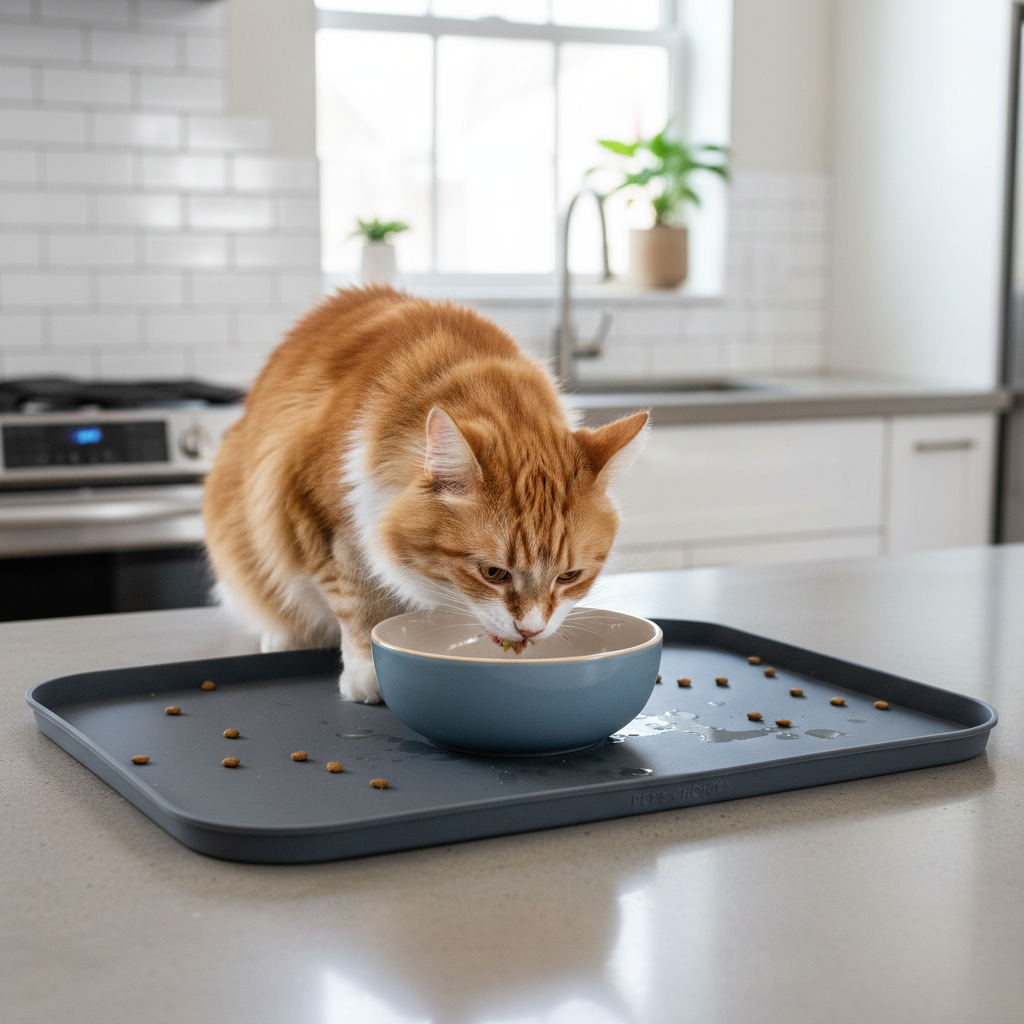
- Pair with a mat that has a raised edge, so you clean the mat instead of the floor.
Common mistakes (and why they waste money)
A few patterns show up again and again when people try to fix sliding bowls.
- Buying “non-slip” that only means “textured”: texture without a grippy material often does nothing on smooth floors.
- Using a too-soft mat: some mats buckle, and the bowl tips when the cat presses the rim.
- Ignoring cleaning: rubber rings pick up residue, then you wonder why grip disappears after a week.
- Over-correcting with height: raised feeders can be helpful for some cats, but the wrong height can make posture awkward.
Also, watch for bowls with strong odors (often from low-quality rubber). If a bowl smells “chemical” out of the box, many cats will avoid it, and you end up chasing a stability problem that is really a preference problem.
When it might be more than a bowl problem
If your cat suddenly starts knocking bowls over, pawing at food, or refusing to eat unless you hold the bowl, consider the possibility that discomfort is driving the behavior. Dental pain, nausea, or neck discomfort can change how a cat approaches a bowl, and it can look like “messiness.”
According to AAHA (American Animal Hospital Association), routine wellness care helps catch issues earlier, so if behavior changes come with weight loss, drooling, bad breath, or appetite shifts, it is smart to consult a veterinarian rather than only changing feeding gear.
Key takeaways and what to do next
If you want fewer spills fast, match the fix to the symptom: sliding usually needs better grip, tipping needs a wider and heavier base, and “mess without movement” needs a better rim shape and a mat that stays flat.
- Start with testing: push the rim, see whether it glides or rocks.
- For slick floors: a true grippy base often beats a thick mat.
- For aggressive eaters: wide-base, heavier bowls tend to reduce tipping.
Pick one change, run it for a few days, and only then decide if you need to upgrade. That approach keeps you from stacking “solutions” that fight each other.
FAQ
What is the best material for a non-slip cat bowl?
It depends on your floor and how hard your cat eats, but many homes do well with stainless steel plus a thick rubber base. If tipping is the bigger issue, a heavier ceramic bowl with a wide footprint often feels more stable.
Do silicone mats actually stop bowls from sliding?
They can, but only if the underside grips your floor and the mat stays clean. On dusty tile or very smooth laminate, some mats drift as a whole, so the bowl looks “non-slip” but still travels.
Why does my cat push the bowl around while eating?
Often it is simple food chasing, your cat is trying to gather kibble toward one side. A wider, shallower bowl or a bowl with a slightly inward rim can reduce that behavior.
Is a raised feeder better for preventing tipping?
A stand with an inset bowl can help because it limits leverage on the rim, but stability depends on the stand’s feet and weight. If you try one, check that it does not wobble when you press it from the side.
How do I keep a water bowl from spilling on hardwood floors?
Look for a heavier bowl with a grippy base and keep the fill level reasonable to reduce slosh. A waterproof mat with a raised edge can protect the floor, but make sure it lies flat so it does not become a tipping point.
How often should I clean the non-slip ring or base?
In many households, a quick wash every few days keeps oils from reducing grip, and a deeper clean weekly helps. If you notice sliding returning, cleaning is an easy first step before replacing anything.
My cat suddenly started flipping the bowl, should I worry?
If it is a new behavior and you also see appetite changes, pawing at the mouth, or avoidance, it may be worth talking to a veterinarian. Sometimes it is just frustration with a moving bowl, but sudden shifts can have other causes.
If you are trying to choose a cat food bowl non slip setup without ordering three versions to “see what sticks,” it helps to share your floor type, bowl size, and whether the issue is sliding or tipping, then you can narrow to one or two options that fit your situation with less trial and error.